The 5 Best Early Entry Saw Blades for Green Concrete: BladesASAP’s Bronze-to-Diamond Rankings
By Blades ASAP Editorial Team 28 minute read
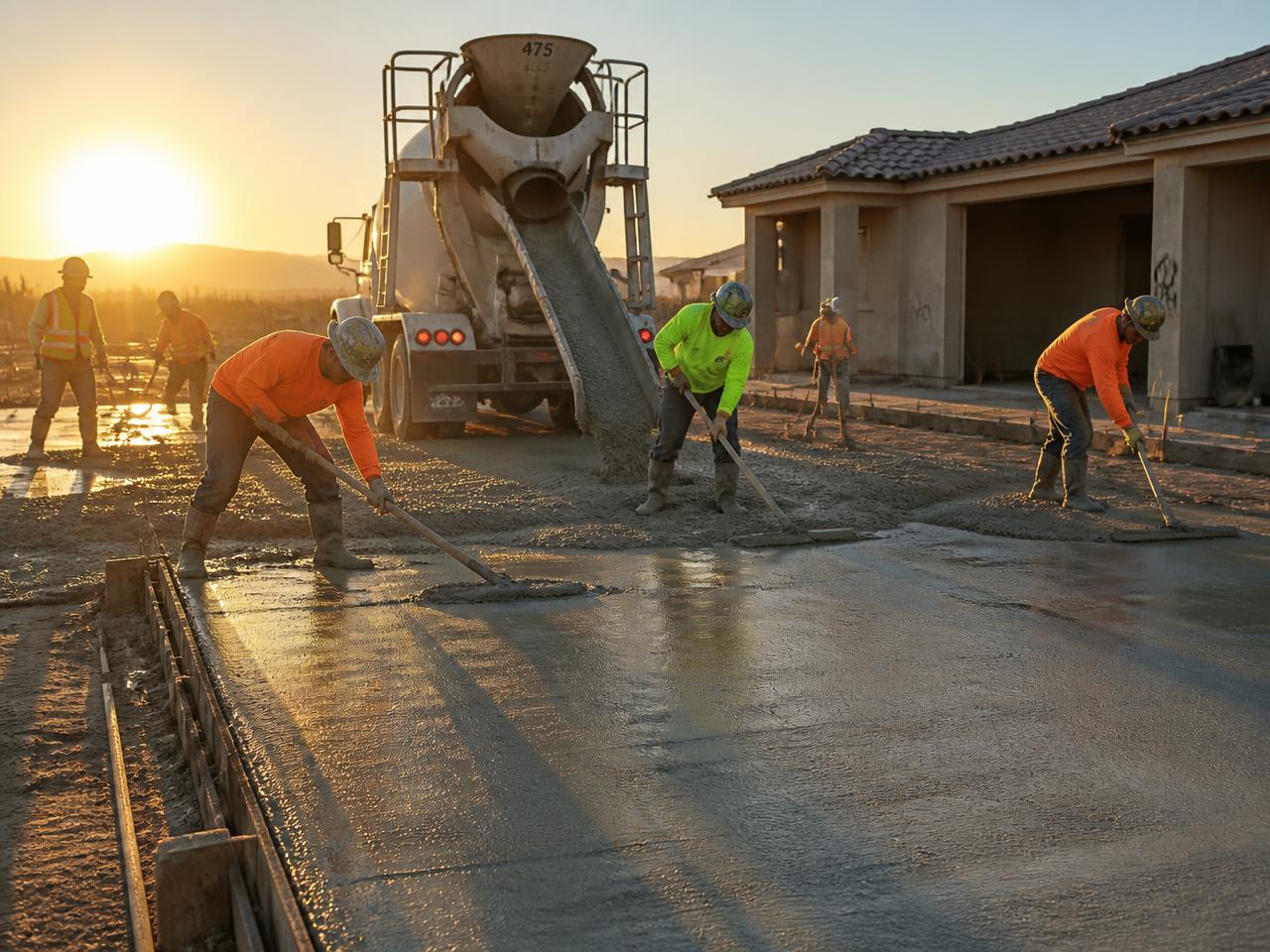
Early-entry cutting places control joints while the concrete is still young and the cutting window is limited.
Looking for the best early entry saw blade for green concrete? We ranked five of our favorite professional early entry concrete blades from Bronze to Diamond based on cutting performance, blade technology, versatility, aggregate options, overall value and how strongly we'd recommend each blade to a contractor. Every blade on this list is a legitimate choice for early entry green concrete cutting, control joints and fresh concrete applications. Bronze does not mean bad. Silver is better. Gold gets serious. Platinum is premium.
And Diamond?
That's the blade we'd put at the front of the line.
Ranked by cutting performance, blade technology, versatility, aggregate options, overall value and how strongly we'd recommend each blade to a contractor.
Bronze Doesn't Mean Bad. Bronze Means You Made the Podium.
Some blade had to start the rankings.
The DTUSA ProCut gets that assignment, and we're not apologizing for putting it here.
Why?
Because Bronze on this list still means we'd sell you the blade. This isn't a five-product article where we grabbed four fillers so we could promote our favorite at the end. If we didn't like ProCut, it wouldn't be here.
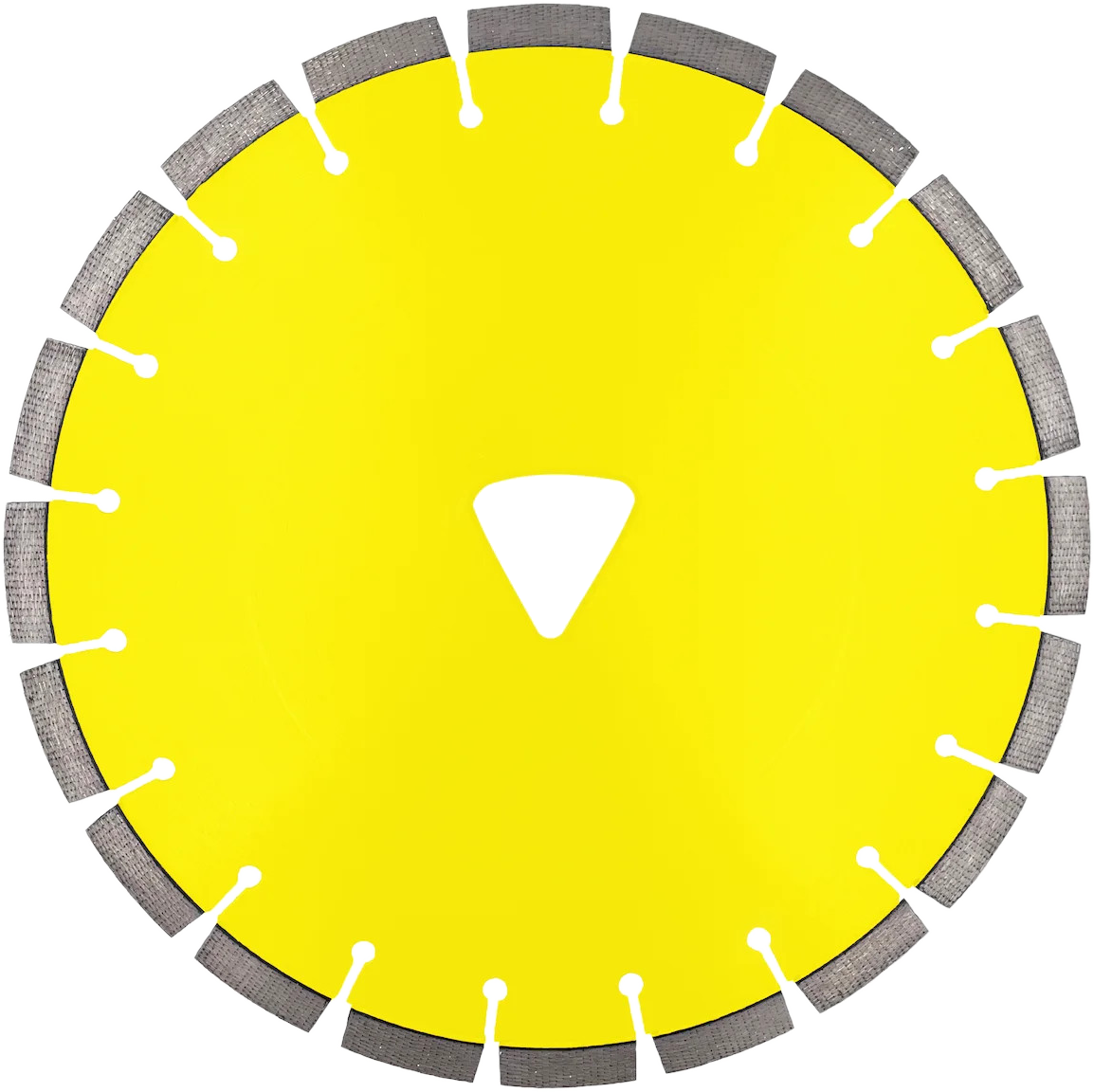
The DTUSA ProCut Early Entry Blade gives contractors a straightforward, purpose-built option for cutting green concrete without forcing every buyer immediately into the highest-priced, highest-technology blade available. And there are plenty of jobs where that's exactly what makes sense. Not every contractor needs Formula 1 equipment to drive to the grocery store.
The first thing we want from any blade on this list is simple: It needs to actually belong in the application. Early entry concrete cutting is not ordinary cured-concrete cutting with a different timestamp.
You're working on young concrete during an important stage of the curing process.
And for plenty of contractors, that may be all the argument needed. If you're cutting green concrete occasionally, adding early entry work to your existing services, managing consumable costs across multiple crews or simply don't need the most premium blade in the building, ProCut gives you a legitimate option.
That's why it made our rankings.
Purpose-Built Beats Improvised
APPLICATION FIT
Purpose-built starts closer to the result you need
Early-entry work asks the blade to operate in young concrete during a limited cutting window.
IMPROVISED START
General-purpose blade
Designed to cover broader cutting work rather than this specialized application.
PURPOSE-BUILT START
Early-entry blade
Built around green concrete, joint quality, timing, and blade behavior.
One of the easiest mistakes in diamond blade selection is trying to stretch one blade across every application.
Concrete is concrete, right?
Not exactly.
Green concrete behaves differently from fully cured concrete.
Aggregate matters.
The age of the slab matters.
The cutting method matters.
The blade matters.
A dedicated early entry green concrete blade gives you a much better starting point than trying to force a general-purpose solution into a specialized job.
Crews balancing performance against consumable cost
Buyers who want a purpose-built blade without immediately jumping to premium technology
Jobs where a dependable early entry option is more important than buying the absolute top blade in the category
There is nothing wrong with buying according to the job. In fact, that's exactly what experienced contractors do. The most expensive blade isn't always the smartest blade.
Because the competition above it gets vicious. From here, we start introducing more aggregate-specific options, more specialized blade systems, core engineering, vibration management, established ultra-early-entry ecosystems and, eventually, engineered diamond placement.
The next four simply give us more reasons to keep climbing.
That's the difference.
BladesASAP Bronze Verdict
Buy the DTUSA ProCut when you want a straightforward, purpose-built early entry blade without automatically paying for the most premium technology on the board.
Buy the DTUSA ProCut when you want a straightforward, purpose-built early entry blade without automatically paying for the most premium technology on the board.
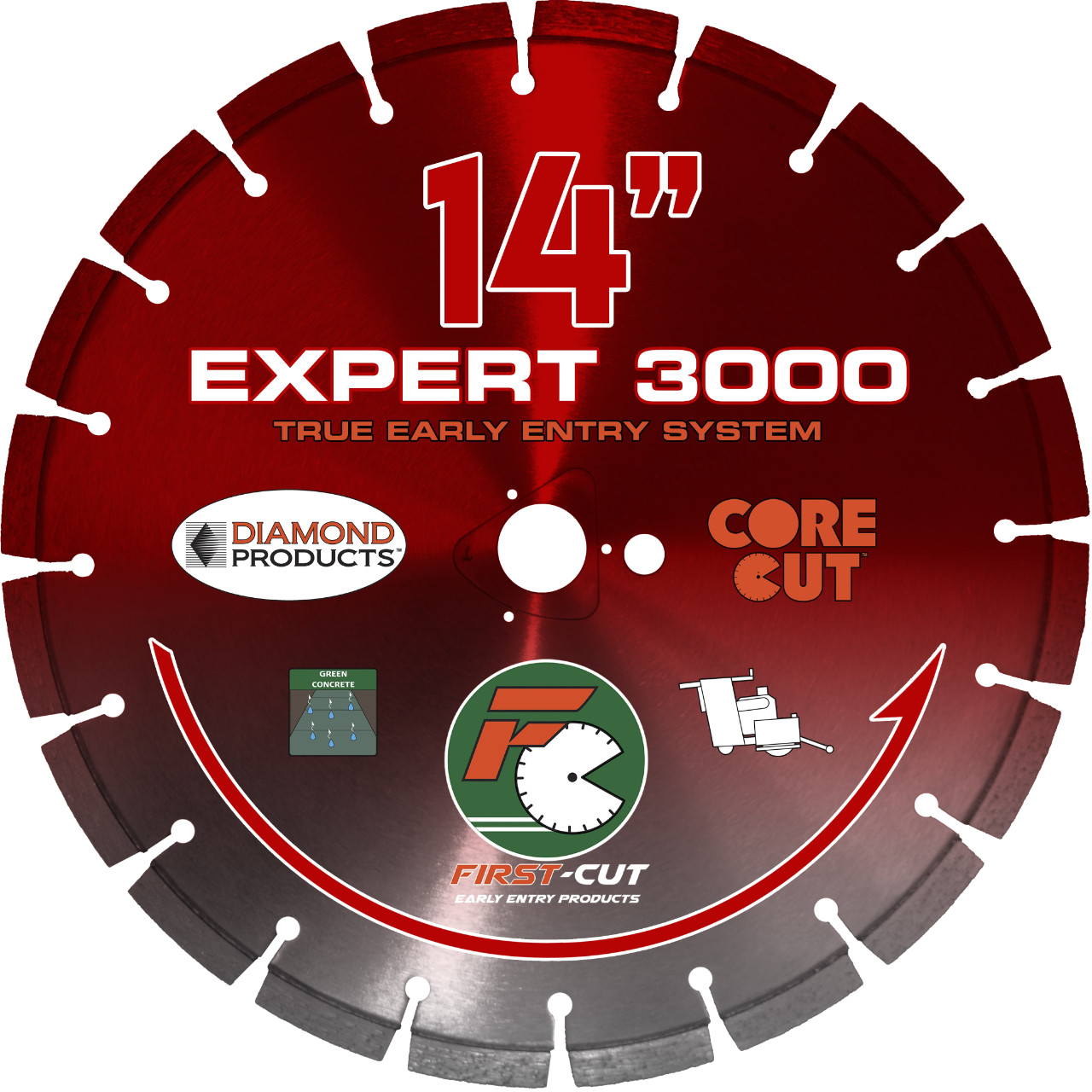
Diamond Products positions First-Cut around True Early Entry cutting for control and relief joints in green concrete. But what really grabs our attention is how seriously the company treats aggregate selection. This is where the ranking starts separating itself.
First-Cut EXPERT isn't built around the idea that every slab is the same. It offers specifications covering a wide range of aggregate conditions.
Very hard.
Hard.
Medium hard.
Medium.
Medium soft.
Soft.
Very soft.
That's how professional diamond tooling should work.
Your Aggregate Matters More Than You Think
If you're buying diamond blades based only on diameter, you're leaving performance on the table. The diamonds do the cutting, but the bond holding those diamonds plays a massive role in how the segment behaves.
As the blade cuts, the bond wears.
Old diamond is released or worn away.
Fresh cutting points become available.
That balance matters.
This is why the basic diamond blade rule can sound backwards at first: Hard aggregate generally benefits from a softer bond. Softer or more abrasive aggregate generally benefits from a harder bond.
Why?
Hard aggregate can wear and dull the exposed diamond, so the blade needs the bond to wear appropriately and expose fresh cutting points. Softer, abrasive material can aggressively wear the segment, so a harder bond helps control that wear.
That's the simplified explanation.
But the practical takeaway is extremely important: The same blade specification isn't automatically perfect for every slab.
Diamond Products understands that.
Multiple Aggregate Options Give Contractors Control
SPECIFICATION RANGE
The slab—not just the saw—guides the choice
First-Cut EXPERT offers specifications across a wide range of aggregate conditions.
1
VERY HARD
2
HARD
3
MEDIUM HARD
4
MEDIUM
5
MEDIUM SOFT
6
SOFT
7
VERY SOFT
AGGREGATE-SPECIFIC CHOICE
The First-Cut EXPERT lineup includes multiple specifications covering everything from very hard aggregate through very soft aggregate depending on blade size and configuration.
That gives contractors something valuable:
Choice.
Not meaningless choice.
Useful choice.
You can look at the material you're actually cutting and choose the blade accordingly. That's a significant step up from simply asking:
"What diameter fits my saw?"
Now we're asking:
"What blade specification gives me the best shot at getting the performance I want from this concrete?"
Diamond Products didn't simply take a normal concrete blade and stick "green concrete" on the package. First-Cut blades are intended for early entry saws and compatible competition-style equipment. The blade family uses an arbor arrangement designed around the equipment used for this style of cutting, and configurations are available individually or with skid plates depending on the setup.
That's another sign that we're looking at a blade built to live inside an actual early entry system.
And systems matter here.
The blade is important.
The saw is important.
The aggregate is important.
Timing is important.
The skid plate, where used, is important.
The operator is important.
Early entry cutting isn't one variable.
It's several variables working together.
Early Means Early
Diamond Products describes its ideal early entry cutting period as occurring roughly within the first several hours following finishing and before final set. That tells you exactly why this is specialized work. You're putting a saw onto concrete at a point when it is still very young.
You're trying to create clean control joints before uncontrolled cracking gets the opportunity to dictate the layout.
ProCut gives us a good, practical early entry blade. First-Cut EXPERT gives us a family of blades that allows us to start optimizing around the concrete itself.
Aggregate.
Specification.
Saw.
Cutting conditions.
That's why it goes higher.
It's not because Bronze suddenly became bad.
It's because Silver gives the contractor more ways to dial the setup in.
This is a strong option for contractors who already know enough about their concrete to care about aggregate-based blade selection. It's also an obvious blade to consider if you're already working inside the First-Cut ecosystem or running compatible early entry equipment. The more seriously you take blade matching, the more attractive a lineup like this becomes.
If you tell us:
"I know my aggregate and I want a blade specification aimed directly at it," you're asking the kind of question that makes First-Cut EXPERT interesting.
BladesASAP Silver Verdict
Diamond Products First-Cut EXPERT earns Silver because it gives contractors a legitimate, professional early entry blade family with serious aggregate-specific depth.
The practical rule can feel backward: hard aggregate generally calls for a softer bond, while softer, more abrasive aggregate generally calls for a harder bond.
HARD AGGREGATE
SOFTER BOND
Lets worn diamond release so fresh cutting points can become available.
SOFT / ABRASIVE AGGREGATE
HARDER BOND
Controls rapid segment wear and helps keep the blade productive longer.
BLADESASAP SILVER VERDICT
First-Cut EXPERT earns Silver because it gives contractors an application-specific early entry blade family with serious aggregate-matching depth.
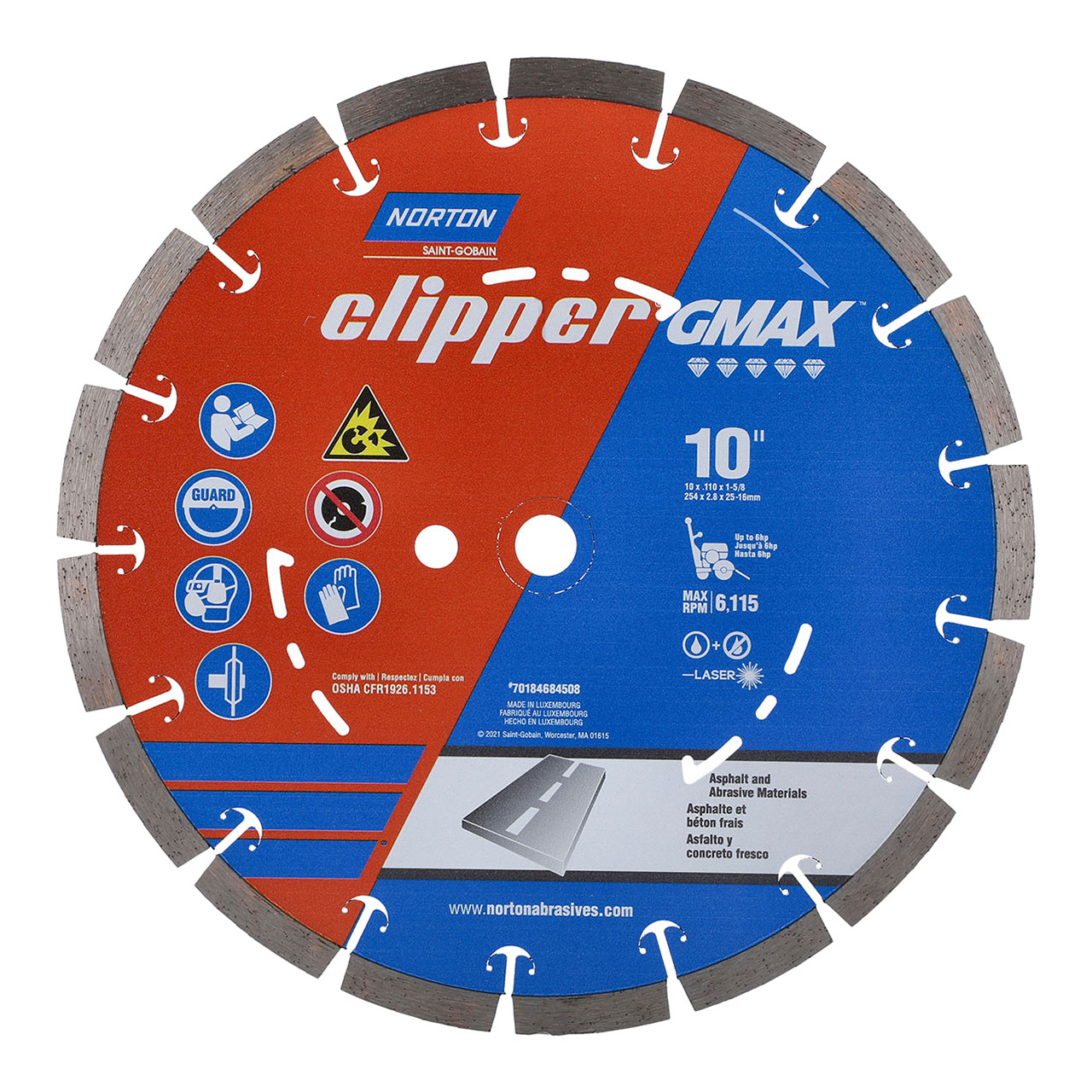
The Norton Clipper GMAX is where this list starts getting nasty. This isn't simply a good green concrete blade. GMAX attacks several of the problems contractors actually deal with while cutting early entry concrete.
Blade flex.
Vibration.
Spalling.
Heat.
Aggregate variation.
Saw compatibility.
Inventory complexity.
Norton didn't just build another blade and tell us the diamonds were premium.
You're asking a steel core rotating at extremely high speed to track through concrete under load. The more that core flexes and moves, the less predictable the cut can become. Norton uses a thick core on the GMAX and promotes it specifically around creating a faster, straighter cut while reducing unwanted flex.
That's exactly what we want from a premium early entry saw blade.
Because flex isn't merely annoying.
It can contribute to poor blade tracking.
It can increase vibration.
It can affect the cut.
And when you're cutting fresh concrete, protecting the edge of that joint matters.
You don't want the blade fighting you.
You want it tracking.
Anchor-Slot Gullet Technology Is More Than Marketing
BLADE ANATOMY
The entire blade influences the cut
GMAX engineering addresses the core, gullets, heat, vibration, and how the blade tracks under load.
THICK CORE · stability
ANCHOR-SLOT GULLETS · behavior
HEAT · management
VIBRATION · reduction focus
The GMAX also uses Norton's anchor-slot gullet technology. This design is intended to help reduce vibration, produce a smoother cut, improve core behavior and help manage heat. That's the kind of engineering we want to see at Gold.
We're no longer talking about:
"Hey, this blade has diamonds."
Of course it does.
We're talking about what the entire blade is doing while those diamonds are cutting.
Core stability.
Vibration.
Heat.
Smoothness.
Blade life.
Now we're into serious professional tooling.
Vibration Matters on Green Concrete
When a blade vibrates excessively, you've introduced another variable into a cut where you're trying to control as many variables as possible.
Fresh concrete doesn't need additional abuse.
You're trying to establish a clean joint.
Not beat the slab into submission.
A more stable blade with reduced vibration can contribute to a better overall cutting experience and give the operator more confidence in the cut. That's where the GMAX design starts making sense. Norton isn't solving an imaginary laboratory problem.
It's going after something operators can actually feel.
Multi-Aggregate Technology Is a Huge Selling Point
This might be the feature that gets the most contractors interested in GMAX. Norton offers GMAX multi-aggregate technology intended to let one blade cover a broad range of aggregate conditions.
Why does that matter?
Because your truck only has so much room.
Your warehouse only needs so much inventory.
Your crew only needs so many opportunities to grab the wrong blade. If a quality blade can cover more applications effectively, that's useful.
Really useful.
Think about the operational value.
Fewer blade SKUs.
Simpler inventory.
Less time deciding.
More flexibility moving between jobs.
Less chance of showing up and discovering the blade you really wanted is sitting twenty miles away on somebody else's truck.
The smart thing about Norton's approach is that multi-aggregate doesn't mean the company abandoned application-specific blades. GMAX options are also available for different aggregate conditions when you want a more targeted setup.
That's a great combination.
Versatility when you want it.
Specialization when you need it.
That's how you earn Gold.
A Skid-Plate-Free Early Entry Option
Here's where Norton really starts separating itself. Certain GMAX configurations are designed around early entry cutting without requiring a skid plate.
That's significant.
Many ultra-early-entry systems rely on a skid plate to support the concrete surface around the blade during the cut. Norton attacks the problem differently through the blade design itself. For contractors looking to simplify their setup, that is absolutely worth considering.
Less equipment.
Less setup.
Fewer components to manage.
Potentially smoother workflow.
That's something you can sell us on.
Saw Compatibility Matters
GMAX also offers knockout arbor configurations intended to work with common early entry saw setups. That sounds like a small thing until the blade you bought doesn't fit what you're actually running.
Compatibility is boring until it's wrong.
Then it's the only thing anybody cares about.
We like blade manufacturers who understand that contractors want tools that get mounted and go to work.
All of those features attack real-world contractor problems. This isn't a blade we're trying to talk ourselves into liking.
We like it.
A lot.
Why Isn't It Number One?
Because two blades still beat it.
And if that sounds harsh, remember where we are.
Gold.
The blade is already on the podium.
If somebody bought GMAX from BladesASAP and told us it was their favorite early entry blade, we wouldn't argue with them. There are legitimate reasons a contractor might rank it number one for their specific operation.
But this is our ranking.
And we've still got two blades above it.
BladesASAP Gold Verdict
Norton GMAX is where the list becomes serious premium equipment. If you care about stability, versatility, vibration management, simplified inventory and professional green concrete performance, this blade deserves a very hard look.
It's aggressive.
It's smart.
It's engineered around actual cutting problems. 🥇 GOLD: Norton Clipper GMAX Early Entry Blade Now we step into one of the biggest names in early entry concrete cutting.
BLADE BEHAVIOR
What premium blade engineering is trying to control
A stable core and engineered gullets address conditions the operator can feel and the finished joint can reveal.
CORE STABILITY
Helps the blade track straighter under load.
VIBRATION
Less unwanted movement supports a smoother cutting experience.
HEAT CONTROL
Gullet design helps manage heat during the cut.
BLADESASAP GOLD VERDICT
Norton GMAX is where the list becomes serious premium equipment.
You Can't Talk About Early Entry Cutting Without Talking About Husqvarna
Let's give Husqvarna the respect it deserves.
The Soff-Cut name is deeply tied to early entry concrete cutting.
Contractors know it.
Concrete crews know it.
The system has been built around getting control joints into fresh concrete extremely early.
Saw.
Blade.
Skid plate.
Cutting technique.
Timing.
Everything is designed around the process.
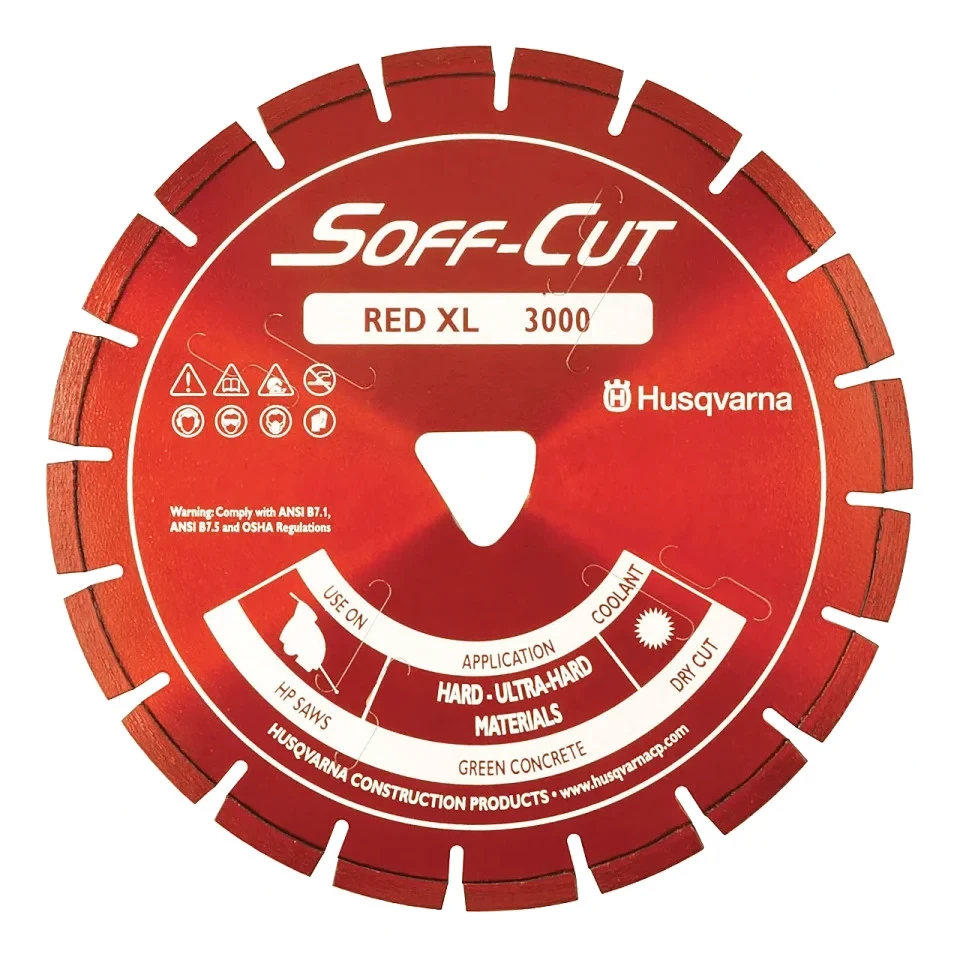
That's why Husqvarna ELITE SOFF-CUT earns Platinum. This is not a blade manufacturer wandering into green concrete and trying its luck.
Husqvarna lives here.
Soff-Cut Is a Complete System
SOFF-CUT WORKFLOW
An integrated system manages the whole early cut
The saw, blade, skid plate, cutting technique, and timing work toward the same objective.
SAW
BLADE
SKID PLATE
TIMING
CLEAN JOINT GOAL
One of Husqvarna's biggest strengths isn't simply the blade.
It's the ecosystem.
The Soff-Cut system was created around ultra-early entry cutting, allowing contractors to get control joints into the slab very early in the curing process. That means the saw, blade and skid plate are built around the same basic objective: Cut early while helping maintain a clean joint.
There is real value in that.
When multiple components are engineered to work together, you're not improvising.
You're following an established system.
Contractors like systems that work.
The Skid Plate Is Part of the Equation
The Soff-Cut skid plate helps support the concrete immediately around the blade during the cut. That's especially important when the slab is still young and you want to reduce raveling and spalling around the joint. This is one of the reasons early entry cutting is fundamentally different from waiting until the concrete is fully cured.
You're managing a more delicate surface.
Husqvarna's system is built around that reality.
Multiple Blade Specifications
The ELITE SOFF-CUT family gives contractors multiple blade specifications for different aggregate conditions and equipment requirements.
Exactly as it should.
At this level, we expect options.
Different aggregates behave differently.
Different saws need different blade sizes.
Different projects demand different setups.
Husqvarna gives crews the ability to match the blade more intelligently to the application.
That's premium territory.
Why Contractors Keep Coming Back to Husqvarna
Because predictability has value.
If your crew already knows the Soff-Cut saw, understands the skid-plate system, knows which blade specifications work in your region and has hundreds of hours inside that process, why would you automatically want to reinvent everything?
You wouldn't.
Familiar systems make crews faster.
Familiar systems reduce decision-making.
Familiar systems help build repeatable results.
That matters commercially.
A lot.
It's one reason Husqvarna remains such a powerful option for professional early entry work.
Husqvarna Has Earned Platinum
We're not putting ELITE SOFF-CUT this high because the logo looks good. We're putting it here because Husqvarna has built one of the defining early entry systems in the market. If you're already running Soff-Cut equipment, this blade family should be sitting very high on your shopping list.
There's very little drama to that recommendation.
It makes sense.
So Why Isn't Husqvarna Number One?
Because we're ranking blades, not brand recognition. And we're not going to take the easy way out by automatically putting the most established name first.
Husqvarna is formidable.
That's exactly why putting another blade above it means something. If we wanted to manufacture an easy winner, we'd make the competition look weak.
We're doing the opposite.
We're telling you Husqvarna ELITE SOFF-CUT is excellent. We're telling you it's one of the strongest options in the category.
If you're running Husqvarna Soff-Cut equipment or want one of the most established premium early entry systems available, ELITE SOFF-CUT is an outstanding choice.
This blade didn't fall short of Diamond.
It beat three very good competitors and forced our winner to earn the top spot.
No hiding five equal recommendations behind a "which one is right for you?" conclusion. You asked BladesASAP for our favorite early entry green concrete blade.
Diamond Tools USA Arix Early Entry Blade organizes diamond particles in an engineered arrangement rather than relying entirely on random distribution.
CONVENTIONAL DISTRIBUTION
ENGINEERED ARRANGEMENT
A traditional diamond segment uses synthetic diamond particles distributed through a metal bond. Those diamonds become exposed as the segment wears.
They cut.
They dull, fracture or release.
The bond continues wearing.
Fresh diamond becomes available.
It's a brilliant system.
It's been the foundation of diamond tooling for decades. Diamond Tools USA Arix Early Entry Blade asks a different question: What if we had more control over where those diamonds were positioned?
That's where things get interesting.
Diamond Tools USA Arix Early Entry Blade technology uses an engineered arrangement of diamond particles instead of relying entirely on random diamond distribution through the segment. That's not just another adjective we can slap onto a product page. That's a different approach to segment architecture.
And for a premium early entry blade, we like that approach a lot.
Stop Thinking About More Diamond
This is one of the easiest traps in diamond tooling.
More diamond must mean better blade, right?
Not necessarily.
Engineering is rarely that simple.
Imagine dumping 100 workers randomly onto a jobsite. Now imagine taking those same 100 workers and intentionally positioning each one where that worker can actually contribute.
Same number of workers.
Very different organization.
That's a simplified way to think about why controlled diamond placement can be appealing.
Why would the blade be the part where you suddenly stop caring about technology?
It shouldn't be.
Your Blade Is Cheap Compared With Everything Around It
JOB-COST CONTEXT
One consumable sits inside a much larger operation
Blade price matters, but it does not operate separately from labor, equipment, concrete, and the project schedule.
TRUCK
TRAILER
SAW
FUEL
LABOR
INSURANCE
CONCRETE
SCHEDULE
AT THE CENTER
THE BLADE PRODUCES THE CUT
This is the part of blade buying that drives us crazy.
Look around the blade.
Truck.
Trailer.
Saw.
Fuel.
Operator.
Labor.
Insurance.
Concrete.
Project schedule.
Customer expectations.
Thousands and thousands of dollars surrounding one consumable cutting tool. And then we start sweating over a relatively small difference in blade price.
That's backwards.
We're not saying price doesn't matter.
Of course it matters.
We're saying price without performance context is almost useless. A cheap blade that works great is an incredible value. A cheap blade that creates downtime isn't cheap.
A premium blade that produces more work can be an incredible value. A premium blade used in the wrong application can be a waste of money. The sticker price doesn't answer the question.
The job does.
Stop Buying Price. Buy Production.
Professional contractors eventually learn this.
The blade isn't valuable because it exists.
It's valuable because it produces.
Cuts.
Footage.
Completed joints.
Finished slabs.
Completed jobs.
Revenue.
That's what the blade is actually there to create.
So the smarter question isn't:
"Which blade costs less?"
It's:
"Which blade gives me the best overall production value for the work I'm doing?"
Those are completely different questions.
And the larger your operation becomes, the bigger that difference gets.
Cost Per Cut Beats Purchase Price
PRODUCTION VALUE
Evaluate what the blade produces—not one number
The article's operating view combines the factors that determine whether a blade creates value on the job.
BLADE LIFE
+
CUTTING SPEED
+
LABOR
+
BLADE CHANGES
COMPLETE VIEW
COST PER CUT
Let's make this painfully simple.
Blade A costs less.
Blade B costs more.
Which one is cheaper?
You don't know.
Not yet.
What if Blade B gives you more usable footage?
What if it cuts faster?
What if you change it less frequently?
What if your operator prefers how it behaves?
What if you finish the slab sooner?
What if that lets the crew move to another job? What if one avoided blade change saves enough labor to make up the price difference? Now the initial purchase price starts looking pretty small.
We aren't making Diamond Tools USA Arix Early Entry Blade number one because we needed something dramatic at the bottom of the article. And we're definitely not picking it because "Diamond Tools USA" conveniently sounds good next to "Diamond tier." We're picking it because ordered diamond technology gives us a legitimate technical reason to prefer the blade.
Engineered diamond placement.
Controlled arrangement.
Purposeful segment architecture.
That's something we can put on the table against the biggest names in the category and say:
This is why we're interested.
But Husqvarna Is the Famous One
Correct.
Husqvarna has enormous credibility in early entry concrete cutting.
We want to sell you the blade that makes sense. But if you specifically ask us for our favorite premium option, we're not going to pretend every tier is equal.
Buy Diamond Tools USA Arix Early Entry Blade If You Want Premium Diamond Technology If engineered diamond placement appeals to you more than conventional random distribution, this is exactly the kind of blade you should be looking at. Buy Diamond Tools USA Arix Early Entry Blade If You Put Serious Footage on Early Entry Blades
The more work a blade performs, the more important performance becomes relative to sticker price. Occasional users can make purchasing decisions differently. High-production contractors can't afford to ignore productivity.
Buy Diamond Tools USA Arix Early Entry Blade If You Care About Production More Than Winning the Cheapest-Blade Contest Nobody hands out trophies because you bought the least expensive consumable.
Your customer cares about the slab.
Your business cares about production.
Buy accordingly.
Buy Diamond Tools USA Arix Early Entry Blade If You're Ready to Try Something Beyond a Conventional Segment If you've been cutting with traditional diamond blades for years and want to see what engineered diamond arrangement brings to the table, Diamond Tools USA Arix Early Entry Blade gives you an obvious opportunity. At some point the comparison needs to leave the computer screen.
Put the blade on the saw.
Put it in concrete.
That's where the final answer comes from.
The Most Expensive Blade Is the One That Costs You Time
That line is worth remembering.
A blade that creates downtime can get expensive fast.
Labor keeps running.
Schedules keep moving.
Equipment keeps costing money.
Customers keep waiting.
So do not evaluate a professional blade entirely by its purchase price.
Why we ranked it: A practical, purpose-built early entry blade and a legitimate starting point for green concrete cutting. Best for: Contractors who want a reliable early entry option without automatically jumping into premium technology. Why it stops at Bronze: The higher tiers give us more specialization, engineering and technical differentiation.
Why we ranked it: Purpose-built early entry cutting with extensive aggregate-specific blade options. Best for: Contractors who understand their concrete and want to dial blade selection around aggregate hardness. Why it beats Bronze: More specialization and greater application-specific depth.
Why we ranked it: Thick-core construction, anchor-slot technology, reduced-vibration engineering, multi-aggregate versatility and useful compatibility features. Best for: Contractors looking for a highly engineered professional early entry blade with the potential to simplify inventory and setup. Why it beats Silver: It attacks several real-world blade-performance and workflow problems at once.
Why we ranked it: One of the defining blade families in one of the defining ultra-early-entry concrete cutting systems. Best for: Husqvarna Soff-Cut users and contractors who value a proven, integrated early entry ecosystem. Why it beats Gold: System depth, application expertise and an enormous track record in early entry concrete cutting.
💎 Diamond — Diamond Tools USA Arix Early Entry Blade Why we ranked it: Engineered diamond placement gives us a genuinely different segment technology to put behind our number-one recommendation. Best for: Contractors looking for our favorite premium early entry blade and willing to invest in higher-level diamond technology.
Why it beats Platinum: Because when we stop ranking logos and force ourselves to pick the blade technology we're most excited to sell, we're choosing Diamond Tools USA Arix Early Entry Blade.
We'd rather ask what you're cutting than simply sell you whatever diameter you typed into the search bar.
Tell us the material.
Tell us the saw.
Tell us the blade size.
Tell us what you know about the aggregate.
Then let's match the blade to the job.
Maybe Bronze is perfect.
Maybe Silver makes more sense.
Maybe GMAX solves exactly the problem you're trying to solve. Maybe you're running a Husqvarna Soff-Cut saw and Platinum is staring you directly in the face.
At some point, another hour of product-page comparisons isn't making the slab any easier to cut.
Choose the correct specification.
Mount the blade.
Get on the concrete.
Make the joint.
Move to the next cut.
If you want practical value, Bronze is waiting. If you want serious aggregate matching, Silver is ready. If Norton's engineering has your attention, Gold earned it.
If you're loyal to one of the most established early entry systems in the world, Platinum is an outstanding place to spend your money. But if you're here because you searched for the best early entry blade for green concrete and you want BladesASAP to quit talking and simply tell you what we'd put at number one:
💎 DIAMOND TOOLS USA ARIX EARLY ENTRY BLADE
That's the winner.
That's our pick.
That's the blade at the top of the board.
Shop early entry green concrete blades at BladesASAP.
OPERATING VALUE
Purchase price is only the first number
The lower-cost blade is not automatically the lower-cost choice once production, labor and interruptions enter the calculation.