Electric Saws: The Complete Guide to the Future of Cutting Concrete
Why electric equipment is expanding professional capability—and why gas saws still matter

Editor's Note
This long-form pillar article is written for contractors, saw operators, fleet managers, estimators and buyers. It presents electric saws as an expanding professional option without treating gas saws as obsolete. Product specifications change; verify current saw, battery, charger and blade documentation before publishing model-specific purchasing claims.
The Central Idea
Electric saws are becoming a major part of professional cutting because they solve specific problems exceptionally well. Gas saws remain essential for many remote, sustained and demanding applications. The most capable contractor does not choose a side; the contractor chooses the right saw, the right blade and the right work method for each cut.
SIDE BY SIDE
Electric and Gas at a Glance
- Indoor and stop/start work
- No fuel mixing or direct exhaust during use
- Lower routine engine maintenance
- Battery ecosystem and connected fleet potential
- Remote and sustained production
- Rapid refueling and mature field infrastructure
- Proven performance across demanding duty cycles
- Existing fleet familiarity, parts and service knowledge


In This Guide
- 1. Electric Saws Are Changing the Way Professionals Cut
- 2. What Is an Electric Saw?
- 3. The Different Types of Electric Saws
- 4. Why Electric Saws Represent a Major Step Forward
- 5. Where Electric Saws Really Shine
- 6. Electric vs. Gas Saws: Choose the Right Tool, Not a Side
- 7. Why Power Cutters Are an Exciting Electric Saw Category
- 8. Husqvarna Electric Power Cutters
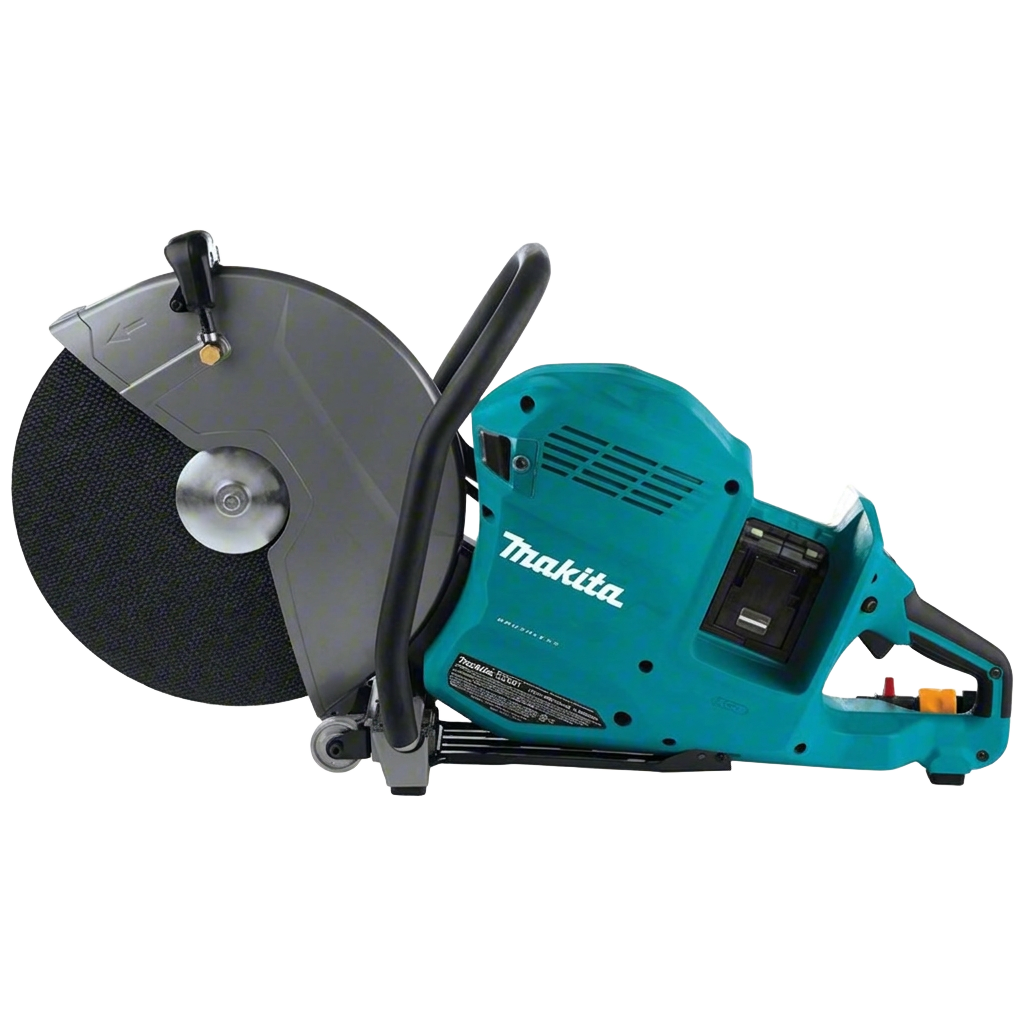
- 9. Makita Electric Saws
- 10. Your Electric Saw Is Only as Effective as Its Blade
- 11. Matching the Blade to the Material
- 12. Why Blade Efficiency Matters Even More on Battery Power
- 13. Electric Saw Battery Basics
- 14. How Long Does an Electric Saw Battery Last?
- 15. Charging Electric Saw Batteries on the Jobsite
- 16. Why Electric Saws Can Cost More Up Front
- 17. Why an Electric Saw Can Cost Less Over Its Lifetime
- 18. The Hidden Cost Contractors Forget: Downtime
- 19. How to Maximize Battery Runtime
- 20. How to Extend Saw and Battery Life
- 21. What to Consider Before Buying
- 22. Do Not Buy the Saw Before Thinking About the Blade
- 23. Where Professional Electric Saws Are Headed
- 24. Why Gas Saws Are Not Going Anywhere Yet
- 25. The Future Jobsite Is About Options
- 26. Choosing the Right Blade for Your Electric Saw
Electric Saws Are Changing the Way Professionals Cut
Electric Saws Are Changing the Way Professionals Cut is best understood as an application decision. The practical question is not whether this feature sounds impressive in a showroom. The question is what it changes during a paid shift. Professional Saws continues to evolve. Battery systems now support work that once belonged almost entirely to combustion engines. Contractors can add electric equipment without abandoning proven gas saws. The saw, blade, material and application must be treated as one cutting system.
One practical point is this: professional Saws continues to evolve. This affects setup, production pace, operator workload and interruptions. Consider it beside another point: battery systems now support work that once belonged almost entirely to combustion engines. A gain in one area can be lost when the blade, accessory, power plan or work method is mismatched. Test the complete system under representative conditions and record completed cuts or linear feet.
One practical point is this: battery systems now support work that once belonged almost entirely to combustion engines. This affects setup, production pace, operator workload and interruptions. Consider it beside another point: contractors can add electric equipment without abandoning proven gas saws. A gain in one area can be lost when the blade, accessory, power plan or work method is mismatched. Test the complete system under representative conditions and record completed cuts or linear feet.
The buying lesson is straightforward. Do not isolate the motor from the blade, the battery or fuel supply, the material and the crew's actual sequence of work. A productive system is one that can be staged reliably, operated within manufacturer guidance, supported with the right consumables and returned to service quickly. That is the standard by which new electric equipment should be judged, and it is the same standard that has kept high-quality gas equipment valuable for decades.
Build the cutting system, not just the saw
Everything in this guide is on the shelf at Blades ASAP:
- Concrete saws & power cutters — gas, corded and battery models side by side
- Diamond blades — every diameter, arbor and material match
- Accessories for power tools — belts, filters, guards and service parts
What Is an Electric Saw?
What Is an Electric Saw? is best understood as an application decision. The practical question is not whether this feature sounds impressive in a showroom. The question is what it changes during a paid shift. Corded machines draw power continuously from an outlet or generator. Cordless machines store energy in lithium-ion battery packs. Brushless motors reduce wear and manage power electronically. Voltage describes electrical potential but does not, by itself, predict jobsite performance. Professional equipment is engineered around duty cycle, thermal control, sealing, balance and service support.
One practical point is this: corded machines draw power continuously from an outlet or generator. This affects setup, production pace, operator workload and interruptions. Consider it beside another point: cordless machines store energy in lithium-ion battery packs. A gain in one area can be lost when the blade, accessory, power plan or work method is mismatched. Test the complete system under representative conditions and record completed cuts or linear feet.
One practical point is this: cordless machines store energy in lithium-ion battery packs. This affects setup, production pace, operator workload and interruptions. Consider it beside another point: brushless motors reduce wear and manage power electronically. A gain in one area can be lost when the blade, accessory, power plan or work method is mismatched. Test the complete system under representative conditions and record completed cuts or linear feet.
The buying lesson is straightforward. Do not isolate the motor from the blade, the battery or fuel supply, the material and the crew's actual sequence of work. A productive system is one that can be staged reliably, operated within manufacturer guidance, supported with the right consumables and returned to service quickly. That is the standard by which new electric equipment should be judged, and it is the same standard that has kept high-quality gas equipment valuable for decades.
Corded, cordless and gas — see all three formats
Compare the machine types described above:
- Husqvarna K1 PACE 14" battery power cutter — cordless, 5.7 in cutting depth
- Husqvarna K 4000 electric Cut-n-Break — corded 120V, 16 in reach
- Husqvarna K 770 DryCut — gas benchmark for dry cutting
The Different Types of Electric Saws
The Different Types of Electric Saws is best understood as an application decision. The practical question is not whether this feature sounds impressive in a showroom. The question is what it changes during a paid shift. Handheld power cutters tackle concrete, masonry, asphalt and metal. Cut-off saws emphasize straight, controlled separation cuts. Masonry and tile saws bring the work to a guided table or fixed cutting head. Circular saws serve wood and specialty construction materials. Ring, wall, floor and cut-n- break systems solve access or depth problems that ordinary handheld saws cannot. Corded and cordless formats answer different infrastructure needs.
One practical point is this: handheld power cutters tackle concrete, masonry, asphalt and metal. This affects setup, production pace, operator workload and interruptions. Consider it beside another point: cut-off saws emphasize straight, controlled separation cuts. A gain in one area can be lost when the blade, accessory, power plan or work method is mismatched. Test the complete system under representative conditions and record completed cuts or linear feet.
One practical point is this: cut-off saws emphasize straight, controlled separation cuts. This affects setup, production pace, operator workload and interruptions. Consider it beside another point: masonry and tile saws bring the work to a guided table or fixed cutting head. A gain in one area can be lost when the blade, accessory, power plan or work method is mismatched. Test the complete system under representative conditions and record completed cuts or linear feet.
The buying lesson is straightforward. Do not isolate the motor from the blade, the battery or fuel supply, the material and the crew's actual sequence of work. A productive system is one that can be staged reliably, operated within manufacturer guidance, supported with the right consumables and returned to service quickly. That is the standard by which new electric equipment should be judged, and it is the same standard that has kept high-quality gas equipment valuable for decades.
Keep reading: The best way to cut tile and porcelain
Shop by saw type
Each family in this section has its own aisle:
- Handheld power cutters — concrete, masonry, asphalt and metal
- Tile saws — guided table cutting for tile and porcelain
- Masonry saws — brick, block and paver production
- Husqvarna K 970 ring saw — deep cuts where a standard blade cannot reach
- Core bits — for openings instead of straight cuts
Why Electric Saws Represent a Major Step Forward
Why Electric Saws Represent a Major Step Forward is best understood as an application decision. The practical question is not whether this feature sounds impressive in a showroom. The question is what it changes during a paid shift. Instant trigger response eliminates pull-start routines. There is no gasoline to mix, transport or store at the point of use. Reduced direct exhaust opens possibilities in controlled work areas. Lower routine engine maintenance can simplify fleet care. Stop-and-start work uses energy only while the trigger is engaged. Battery platforms can connect several tools to one charging strategy.
One practical point is this: instant trigger response eliminates pull-start routines. This affects setup, production pace, operator workload and interruptions. Consider it beside another point: there is no gasoline to mix, transport or store at the point of use. A gain in one area can be lost when the blade, accessory, power plan or work method is mismatched. Test the complete system under representative conditions and record completed cuts or linear feet.
One practical point is this: there is no gasoline to mix, transport or store at the point of use. This affects setup, production pace, operator workload and interruptions. Consider it beside another point: reduced direct exhaust opens possibilities in controlled work areas. A gain in one area can be lost when the blade, accessory, power plan or work method is mismatched. Test the complete system under representative conditions and record completed cuts or linear feet.
The buying lesson is straightforward. Do not isolate the motor from the blade, the battery or fuel supply, the material and the crew's actual sequence of work. A productive system is one that can be staged reliably, operated within manufacturer guidance, supported with the right consumables and returned to service quickly. That is the standard by which new electric equipment should be judged, and it is the same standard that has kept high-quality gas equipment valuable for decades.
Instant-start electric saws in stock
No pull start, no fuel mixing:
- Husqvarna K1 PACE 12" electric cutter — trigger response, 4.75 in depth
- Husqvarna K540i electric cutter — lighter 10.5 in battery cutter
- PACE battery packs — one platform across the kit
Where Electric Saws Really Shine
Where Electric Saws Really Shine is best understood as an application decision. The practical question is not whether this feature sounds impressive in a showroom. The question is what it changes during a paid shift. Interior renovations reward equipment with no direct exhaust during use. Occupied buildings and noise-sensitive sites reward fast setup and shorter disturbance windows. Service work often follows a measure-cut-move-repeat rhythm. Residential hardscape and remodeling jobs benefit from easy transport. Precision jobs benefit from predictable starting and controlled power delivery. Ventilation and silica controls remain mandatory even when the motor is electric.
One practical point is this: interior renovations reward equipment with no direct exhaust during use. This affects setup, production pace, operator workload and interruptions. Consider it beside another point: occupied buildings and noise-sensitive sites reward fast setup and shorter disturbance windows. A gain in one area can be lost when the blade, accessory, power plan or work method is mismatched. Test the complete system under representative conditions and record completed cuts or linear feet.
One practical point is this: occupied buildings and noise-sensitive sites reward fast setup and shorter disturbance windows. This affects setup, production pace, operator workload and interruptions. Consider it beside another point: service work often follows a measure-cut-move-repeat rhythm. A gain in one area can be lost when the blade, accessory, power plan or work method is mismatched. Test the complete system under representative conditions and record completed cuts or linear feet.
The buying lesson is straightforward. Do not isolate the motor from the blade, the battery or fuel supply, the material and the crew's actual sequence of work. A productive system is one that can be staged reliably, operated within manufacturer guidance, supported with the right consumables and returned to service quickly. That is the standard by which new electric equipment should be judged, and it is the same standard that has kept high-quality gas equipment valuable for decades.
Field Checklist
- Interior renovations reward equipment with no direct exhaust during use.
- Occupied buildings and noise-sensitive sites reward fast setup and shorter disturbance windows.
- Service work often follows a measure-cut-move-repeat rhythm.
- Residential hardscape and remodeling jobs benefit from easy transport.
- Precision jobs benefit from predictable starting and controlled power delivery.
Indoor and occupied-site kit
Silica and ventilation controls stay mandatory — gear up:
- Cordless HEPA dust extractor (DE 110 iH) — 36V, no cord to drag indoors
- DE 120 H HEPA dust extractor — 3 HP for heavier dry cutting
- K1 PACE rescue saw, 14" — controlled cutting in tight interiors
Electric vs. Gas Saws: Choose the Right Tool, Not a Side
Electric vs. Gas Saws: Choose the Right Tool, Not a Side is best understood as an application decision. The practical question is not whether this feature sounds impressive in a showroom. The question is what it changes during a paid shift. Electric excels at indoor, intermittent and infrastructure-supported work. Gas excels at remote locations, rapid refueling and long sustained workloads. A proven gas power cutter remains a serious revenue-producing tool. An electric cutter can expand the jobs a crew accepts rather than merely replacing another saw. Mixed fleets let contractors select power by application. Professional judgment matters more than loyalty to a power source.
One practical point is this: electric excels at indoor, intermittent and infrastructure-supported work. This affects setup, production pace, operator workload and interruptions. Consider it beside another point: gas excels at remote locations, rapid refueling and long sustained workloads. A gain in one area can be lost when the blade, accessory, power plan or work method is mismatched. Test the complete system under representative conditions and record completed cuts or linear feet.
One practical point is this: gas excels at remote locations, rapid refueling and long sustained workloads. This affects setup, production pace, operator workload and interruptions. Consider it beside another point: a proven gas power cutter remains a serious revenue-producing tool. A gain in one area can be lost when the blade, accessory, power plan or work method is mismatched. Test the complete system under representative conditions and record completed cuts or linear feet.
The buying lesson is straightforward. Do not isolate the motor from the blade, the battery or fuel supply, the material and the crew's actual sequence of work. A productive system is one that can be staged reliably, operated within manufacturer guidance, supported with the right consumables and returned to service quickly. That is the standard by which new electric equipment should be judged, and it is the same standard that has kept high-quality gas equipment valuable for decades.
Electric vs gas — both, in stock
Choose the tool, not a side:
- Husqvarna K1 PACE 14" (electric) — battery production cutting
- Husqvarna K1270 (gas) — 7.8 HP for sustained remote work
- Husqvarna K770 14" (gas) — the crew-favorite all-rounder
Why Power Cutters Are an Exciting Electric Saw Category
Why Power Cutters Are an Exciting Electric Saw Category is best understood as an application decision.
The strongest equipment decisions begin with the cut and work backward through the blade, saw and power source. Power cutters combine handheld mobility with large abrasive or diamond blades. Common work includes concrete slabs, pipe, block, brick, pavers, asphalt and metal. Wet cutting can suppress dust and cool the blade when the saw and blade permit it. Dry cutting preserves mobility but requires appropriate controls. Balance, cutting depth, blade speed and runtime determine productivity. Battery power is especially compelling when a crew must enter, cut and exit quickly.
One practical point is this: power cutters combine handheld mobility with large abrasive or diamond blades. This affects setup, production pace, operator workload and interruptions. Consider it beside another point: common work includes concrete slabs, pipe, block, brick, pavers, asphalt and metal. A gain in one area can be lost when the blade, accessory, power plan or work method is mismatched. Test the complete system under representative conditions and record completed cuts or linear feet.
One practical point is this: common work includes concrete slabs, pipe, block, brick, pavers, asphalt and metal. This affects setup, production pace, operator workload and interruptions. Consider it beside another point: wet cutting can suppress dust and cool the blade when the saw and blade permit it. A gain in one area can be lost when the blade, accessory, power plan or work method is mismatched. Test the complete system under representative conditions and record completed cuts or linear feet.
The buying lesson is straightforward. Do not isolate the motor from the blade, the battery or fuel supply, the material and the crew's actual sequence of work. A productive system is one that can be staged reliably, operated within manufacturer guidance, supported with the right consumables and returned to service quickly. That is the standard by which new electric equipment should be judged, and it is the same standard that has kept high-quality gas equipment valuable for decades.
Power cutter lineup
The category this section is about:
- All concrete saws & power cutters — browse by power source and blade size
- Husqvarna equipment — full brand catalog
- Current deals — saw and blade bundles
Husqvarna Electric Power Cutters
Husqvarna Electric Power Cutters is best understood as an application decision. The practical question is not whether this feature sounds impressive in a showroom. The question is what it changes during a paid shift. Husqvarna carries decades of professional power-cutter experience into battery equipment. The K 1 PACE family is designed around a high-power professional battery ecosystem. The platform includes fast-charging and connected fleet features. Husqvarna explicitly pairs the system with battery- optimized blades. Available variants address general construction and specialized rail or rescue work. Buyers should verify the exact blade diameter, arbor, speed and cutting method for their model.
One practical point is this: Husqvarna carries decades of professional power-cutter experience into battery equipment. This affects setup, production pace, operator workload and interruptions. Consider it beside another point: the K 1 PACE family is designed around a high-power professional battery ecosystem. A gain in one area can be lost when the blade, accessory, power plan or work method is mismatched. Test the complete system under representative conditions and record completed cuts or linear feet.
One practical point is this: the K 1 PACE family is designed around a high-power professional battery ecosystem. This affects setup, production pace, operator workload and interruptions. Consider it beside another point: the platform includes fast-charging and connected fleet features. A gain in one area can be lost when the blade, accessory, power plan or work method is mismatched. Test the complete system under representative conditions and record completed cuts or linear feet.
The buying lesson is straightforward. Do not isolate the motor from the blade, the battery or fuel supply, the material and the crew's actual sequence of work. A productive system is one that can be staged reliably, operated within manufacturer guidance, supported with the right consumables and returned to service quickly. That is the standard by which new electric equipment should be judged, and it is the same standard that has kept high-quality gas equipment valuable for decades.
Husqvarna electric power cutters at Blades ASAP
Every PACE machine mentioned here:
- K1 PACE 14" electric power cutter — 5.7 in max depth
- K1 PACE 12" electric power cutter — 4.75 in max depth
- K1 PACE rescue saw 14" — fire and rescue configuration
- K1 PACE rescue saw 12" — lighter rescue option
- K540i electric power cutter — 10.5 in battery cutter
SEE IT IN THE FIELD
High power battery cutter in action
Makita Electric Saws
Makita Electric Saws is best understood as an application decision. For a contractor, performance becomes meaningful only when it improves completed work, crew consistency, safety planning or operating cost. Makita builds on contractor familiarity with cordless tools and batteries. The XGT range includes professional handheld power cutters. Its 14-inch platform uses two 40V max batteries as an 80V max system. Professional features include brushless motors, electric braking and electronic control. The platform targets masonry, concrete and metal applications. The correct application-specific blade remains essential to realizing the tool's performance.
One practical point is this: Makita builds on contractor familiarity with cordless tools and batteries. This affects setup, production pace, operator workload and interruptions. Consider it beside another point: the XGT range includes professional handheld power cutters. A gain in one area can be lost when the blade, accessory, power plan or work method is mismatched. Test the complete system under representative conditions and record completed cuts or linear feet.
One practical point is this: the XGT range includes professional handheld power cutters. This affects setup, production pace, operator workload and interruptions. Consider it beside another point: its 14- inch platform uses two 40V max batteries as an 80V max system. A gain in one area can be lost when the blade, accessory, power plan or work method is mismatched. Test the complete system under representative conditions and record completed cuts or linear feet.
The buying lesson is straightforward. Do not isolate the motor from the blade, the battery or fuel supply, the material and the crew's actual sequence of work. A productive system is one that can be staged reliably, operated within manufacturer guidance, supported with the right consumables and returned to service quickly. That is the standard by which new electric equipment should be judged, and it is the same standard that has kept high-quality gas equipment valuable for decades.
Battery platform hardware
Pair any battery saw with the right packs and chargers:
- B750X PACE battery pack — highest capacity PACE pack
- B380X PACE battery pack — lighter pack for service work
- BLi200 saw battery — 180 Wh for BLi tools
BATTERY VS GAS, TESTED
Can a brushless electric power cutter keep up?
Your Electric Saw Is Only as Effective as Its Blade
Your Electric Saw Is Only as Effective as Its Blade is best understood as an application decision. The strongest equipment decisions begin with the cut and work backward through the blade, saw and power source. Diamond blades cut mineral materials by exposing industrial diamond in a bonded segment. Abrasive wheels wear progressively while cutting compatible materials. General-purpose blades trade specialization for versatility. Concrete, reinforced-concrete, asphalt, masonry, stone and metal blades use different designs. Diameter, arbor and maximum operating speed are compatibility requirements. Wet or dry approval must match the planned method. The wrong blade can slow cutting, increase heat and waste battery energy.
One practical point is this: diamond blades cut mineral materials by exposing industrial diamond in a bonded segment. This affects setup, production pace, operator workload and interruptions. Consider it beside another point: abrasive wheels wear progressively while cutting compatible materials. A gain in one area can be lost when the blade, accessory, power plan or work method is mismatched. Test the complete system under representative conditions and record completed cuts or linear feet.
One practical point is this: abrasive wheels wear progressively while cutting compatible materials. This affects setup, production pace, operator workload and interruptions. Consider it beside another point: general-purpose blades trade specialization for versatility. A gain in one area can be lost when the blade, accessory, power plan or work method is mismatched. Test the complete system under representative conditions and record completed cuts or linear feet.
The buying lesson is straightforward. Do not isolate the motor from the blade, the battery or fuel supply, the material and the crew's actual sequence of work. A productive system is one that can be staged reliably, operated within manufacturer guidance, supported with the right consumables and returned to service quickly. That is the standard by which new electric equipment should be judged, and it is the same standard that has kept high-quality gas equipment valuable for decades.
Field Checklist
- Diamond blades cut mineral materials by exposing industrial diamond in a bonded segment.
- Abrasive wheels wear progressively while cutting compatible materials.
- General-purpose blades trade specialization for versatility.
- Concrete, reinforced-concrete, asphalt, masonry, stone and metal blades use different designs.
- Diameter, arbor and maximum operating speed are compatibility requirements.
Keep reading: What is a diamond blade? · Segmented vs. continuous rim vs. turbo blades
Match the blade at Blades ASAP
The saw is only as good as what is on the spindle:
- Concrete blades — cured and green concrete
- Masonry blades — brick and block
- Asphalt blades — soft abrasive material
- All diamond blades — diameter, arbor and speed on every page
Matching the Blade to the Material
Matching the Blade to the Material is best understood as an application decision. This is where a specification must be translated into jobsite consequences rather than repeated as marketing language. Hard aggregate often calls for a bond that releases diamond at an appropriate rate. Abrasive asphalt can erode a concrete-oriented core or segment system prematurely. Reinforcing steel changes heat, resistance and segment demands. Brick and block vary widely in abrasiveness and density. Stone may demand a clean edge or material-specific bond. Metal cutting requires a wheel explicitly approved for the metal and saw. Test cuts and manufacturer guidance help when material composition is uncertain.
One practical point is this: hard aggregate often calls for a bond that releases diamond at an appropriate rate. This affects setup, production pace, operator workload and interruptions. Consider it beside another point: abrasive asphalt can erode a concrete-oriented core or segment system prematurely. A gain in one area can be lost when the blade, accessory, power plan or work method is mismatched. Test the complete system under representative conditions and record completed cuts or linear feet.
One practical point is this: abrasive asphalt can erode a concrete-oriented core or segment system prematurely. This affects setup, production pace, operator workload and interruptions. Consider it beside another point: reinforcing steel changes heat, resistance and segment demands. A gain in one area can be lost when the blade, accessory, power plan or work method is mismatched. Test the complete system under representative conditions and record completed cuts or linear feet.
The buying lesson is straightforward. Do not isolate the motor from the blade, the battery or fuel supply, the material and the crew's actual sequence of work. A productive system is one that can be staged reliably, operated within manufacturer guidance, supported with the right consumables and returned to service quickly. That is the standard by which new electric equipment should be judged, and it is the same standard that has kept high-quality gas equipment valuable for decades.
Keep reading: Choosing the right concrete blade · The best way to cut tile and porcelain
Blade-to-material shortcuts
Jump straight to the right blade family:
- Concrete blades — hard aggregate and rebar
- Porcelain & tile blades — chip-free continuous rim
- Popular blade sizes — 12, 14, 16, 18 and 20 inch
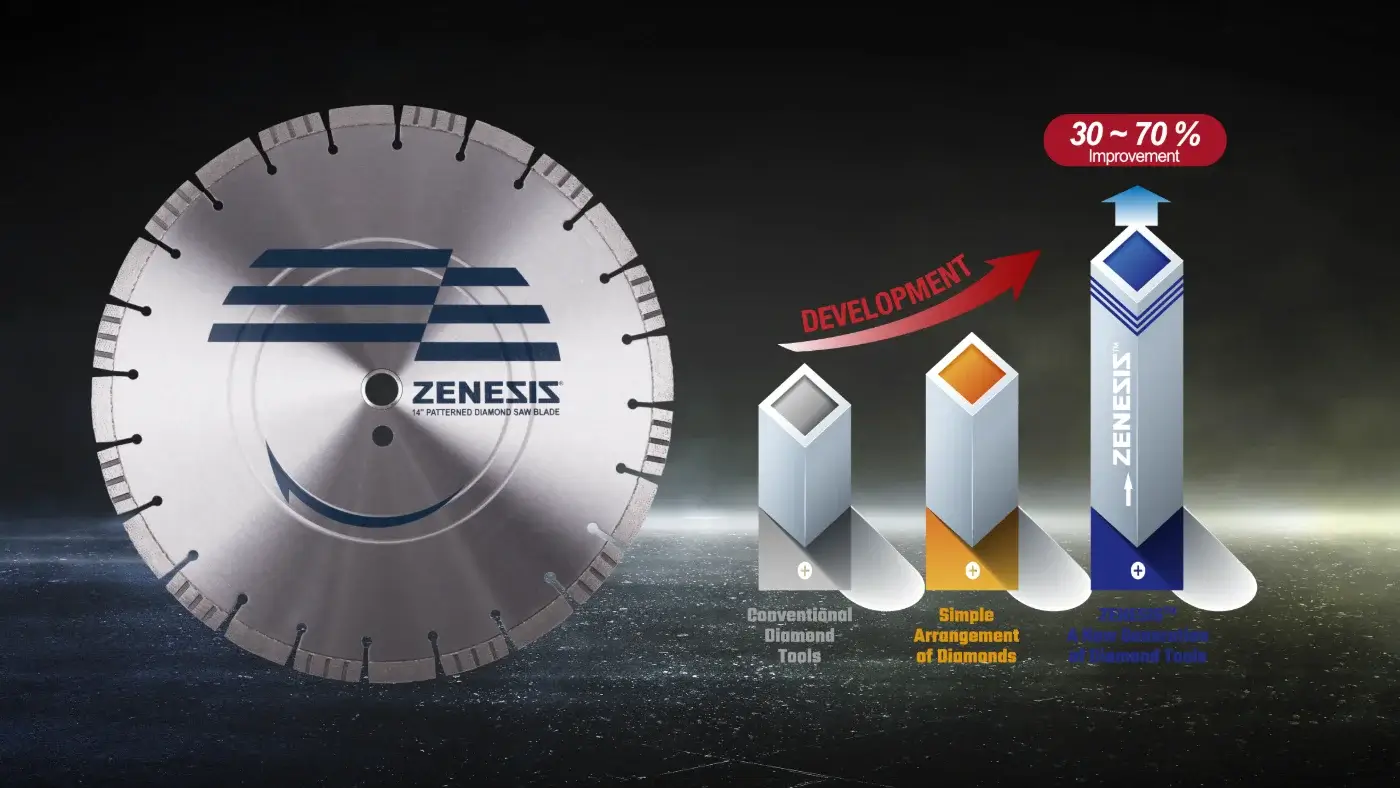
- Zenesis blades — engineered diamond distribution
Why Blade Efficiency Matters Even More on Battery Power
Why Blade Efficiency Matters Even More on Battery Power is best understood as an application decision. The strongest equipment decisions begin with the cut and work backward through the blade, saw and power source. A battery contains a finite amount of usable energy. Friction that does not advance the cut becomes heat and lost runtime. An efficient blade converts more stored energy into completed work. Forcing a glazed or mismatched blade increases current demand and operator fatigue. Straight cuts reduce side loading. Proper water flow can support blade life and dust suppression where approved. Cost per completed cut matters more than purchase price alone.
One practical point is this: a battery contains a finite amount of usable energy. This affects setup, production pace, operator workload and interruptions. Consider it beside another point: friction that does not advance the cut becomes heat and lost runtime. A gain in one area can be lost when the blade, accessory, power plan or work method is mismatched. Test the complete system under representative conditions and record completed cuts or linear feet.
One practical point is this: friction that does not advance the cut becomes heat and lost runtime. This affects setup, production pace, operator workload and interruptions. Consider it beside another point: an efficient blade converts more stored energy into completed work. A gain in one area can be lost when the blade, accessory, power plan or work method is mismatched. Test the complete system under representative conditions and record completed cuts or linear feet.
The buying lesson is straightforward. Do not isolate the motor from the blade, the battery or fuel supply, the material and the crew's actual sequence of work. A productive system is one that can be staged reliably, operated within manufacturer guidance, supported with the right consumables and returned to service quickly. That is the standard by which new electric equipment should be judged, and it is the same standard that has kept high-quality gas equipment valuable for decades.
Keep reading: Choosing the right diamond blade thickness · Diamond blade segment height, and why it matters
Efficient blades stretch every charge
Free-cutting blades pull fewer amps per cut:
- Zenesis general purpose blade — fast cut, long life
- Husqvarna Vari-Cut S35 14" — versatile concrete and paver blade
- Husqvarna Elite-Cut S35 EXO-GRIT — premium concrete performance
- Pearl blades — value-priced segmented blades
Electric Saw Battery Basics
Electric Saw Battery Basics is best understood as an application decision. The strongest equipment decisions begin with the cut and work backward through the blade, saw and power source. Voltage relates to the electrical potential available to the motor. Amp-hours describe charge capacity under defined conditions. Watt-hours provide a useful energy comparison by combining voltage and capacity. High-output packs must deliver current without excessive heat or voltage sag. Battery-management electronics protect cells and communicate with the tool and charger. Larger packs add runtime but also weight and cost. Professional packs are priced around power delivery, durability, sealing, cooling and service.
One practical point is this: voltage relates to the electrical potential available to the motor. This affects setup, production pace, operator workload and interruptions. Consider it beside another point: amp- hours describe charge capacity under defined conditions. A gain in one area can be lost when the blade, accessory, power plan or work method is mismatched. Test the complete system under representative conditions and record completed cuts or linear feet.
One practical point is this: amp-hours describe charge capacity under defined conditions. This affects setup, production pace, operator workload and interruptions. Consider it beside another point: watt- hours provide a useful energy comparison by combining voltage and capacity. A gain in one area can be lost when the blade, accessory, power plan or work method is mismatched. Test the complete system under representative conditions and record completed cuts or linear feet.
The buying lesson is straightforward. Do not isolate the motor from the blade, the battery or fuel supply, the material and the crew's actual sequence of work. A productive system is one that can be staged reliably, operated within manufacturer guidance, supported with the right consumables and returned to service quickly. That is the standard by which new electric equipment should be judged, and it is the same standard that has kept high-quality gas equipment valuable for decades.
Field Checklist
- Voltage relates to the electrical potential available to the motor.
- Amp-hours describe charge capacity under defined conditions.
- Watt-hours provide a useful energy comparison by combining voltage and capacity.
- High-output packs must deliver current without excessive heat or voltage sag.
- Battery-management electronics protect cells and communicate with the tool and charger.
Batteries and chargers in stock
Everything in this section is purchasable today:
- B750X PACE battery — long-run production pack
- C1800X fast charger — 1800 W jobsite charging
- C80 desktop charger — shop and truck charging
How Long Does an Electric Saw Battery Last?
How Long Does an Electric Saw Battery Last? is best understood as an application decision. The strongest equipment decisions begin with the cut and work backward through the blade, saw and power source. Runtime changes with material hardness and abrasiveness. Cutting depth and blade engagement change motor load. Blade condition can materially change energy use. Temperature affects both battery output and charging. Continuous cutting creates a different thermal demand than intermittent cuts. Operator pressure and cut alignment influence resistance. Completed cuts or linear feet are often more useful measures than minutes.
One practical point is this: runtime changes with material hardness and abrasiveness. This affects setup, production pace, operator workload and interruptions. Consider it beside another point: cutting depth and blade engagement change motor load. A gain in one area can be lost when the blade, accessory, power plan or work method is mismatched. Test the complete system under representative conditions and record completed cuts or linear feet.
One practical point is this: cutting depth and blade engagement change motor load. This affects setup, production pace, operator workload and interruptions. Consider it beside another point: blade condition can materially change energy use. A gain in one area can be lost when the blade, accessory, power plan or work method is mismatched. Test the complete system under representative conditions and record completed cuts or linear feet.
The buying lesson is straightforward. Do not isolate the motor from the blade, the battery or fuel supply, the material and the crew's actual sequence of work. A productive system is one that can be staged reliably, operated within manufacturer guidance, supported with the right consumables and returned to service quickly. That is the standard by which new electric equipment should be judged, and it is the same standard that has kept high-quality gas equipment valuable for decades.
Add runtime instead of guessing
Runtime is a staging problem — solve it with hardware:
- Spare B380X packs — rotate two or three per saw
- B750X high-capacity pack — fewer swaps per shift
- QC330 charger — keep BLi packs cycling
Charging Electric Saw Batteries on the Jobsite
Charging Electric Saw Batteries on the Jobsite is best understood as an application decision. This is where a specification must be translated into jobsite consequences rather than repeated as marketing language. Standard chargers favor flexibility while rapid chargers reduce turnaround. One battery in the saw, one cooling or charging and one ready creates a resilient rotation. Site power must support the charger's actual requirements. Charging should occur in a clean, dry and manufacturer-approved area. Crews should plan around breaks and task sequencing. Large jobs may justify multiple chargers or a dedicated charging station. A charging plan turns cordless operation into a repeatable production system.
One practical point is this: standard chargers favor flexibility while rapid chargers reduce turnaround. This affects setup, production pace, operator workload and interruptions. Consider it beside another point: one battery in the saw, one cooling or charging and one ready creates a resilient rotation. A gain in one area can be lost when the blade, accessory, power plan or work method is mismatched. Test the complete system under representative conditions and record completed cuts or linear feet.
One practical point is this: one battery in the saw, one cooling or charging and one ready creates a resilient rotation. This affects setup, production pace, operator workload and interruptions. Consider it beside another point: site power must support the charger's actual requirements. A gain in one area can be lost when the blade, accessory, power plan or work method is mismatched. Test the complete system under representative conditions and record completed cuts or linear feet.
The buying lesson is straightforward. Do not isolate the motor from the blade, the battery or fuel supply, the material and the crew's actual sequence of work. A productive system is one that can be staged reliably, operated within manufacturer guidance, supported with the right consumables and returned to service quickly. That is the standard by which new electric equipment should be judged, and it is the same standard that has kept high-quality gas equipment valuable for decades.
Field Checklist
- Standard chargers favor flexibility while rapid chargers reduce turnaround.
- One battery in the saw, one cooling or charging and one ready creates a resilient rotation.
- Site power must support the charger's actual requirements.
- Charging should occur in a clean, dry and manufacturer-approved area.
- Crews should plan around breaks and task sequencing.
Jobsite charging gear
Charging is production equipment:
- C1800X 1800 W fast charger — fastest turnaround
- C900X 900 W fast charger — truck-friendly output
- C80 BLi-X desktop charger — overnight top-off
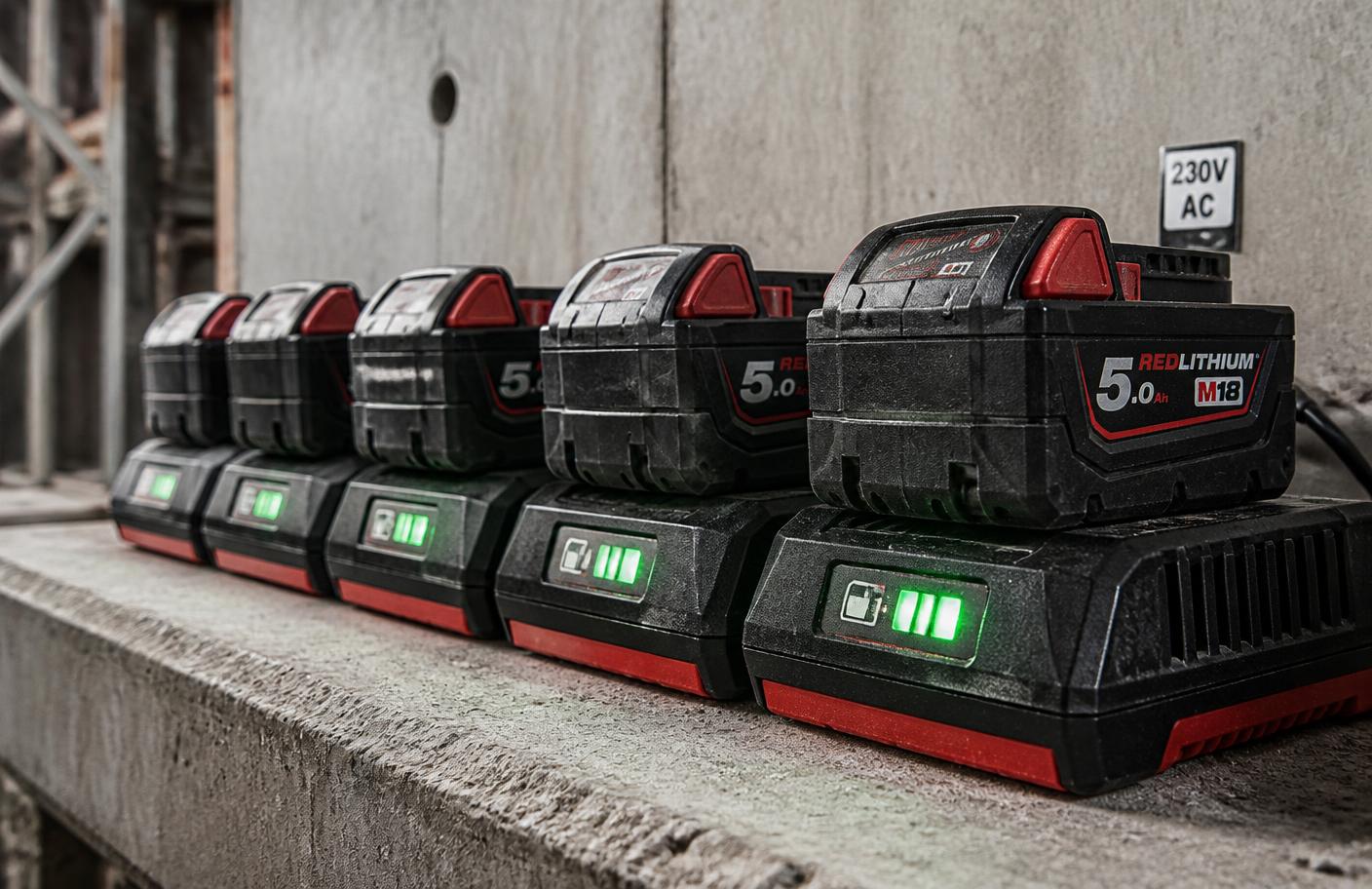
Treat chargers and spare batteries as production equipment.
Why Electric Saws Can Cost More Up Front
Why Electric Saws Can Cost More Up Front is best understood as an application decision. The practical question is not whether this feature sounds impressive in a showroom. The question is what it changes during a paid shift. The initial package may include the bare tool, several batteries and one or more chargers. High-power construction batteries contain substantial cells, electronics and thermal engineering. Contractors may also invest in water-delivery or dust-control accessories. The first purchase can therefore exceed the price of a familiar gas saw. Acquisition price should be evaluated against expected utilization. Existing batteries in a compatible ecosystem can change the calculation.
One practical point is this: the initial package may include the bare tool, several batteries and one or more chargers. This affects setup, production pace, operator workload and interruptions. Consider it beside another point: high-power construction batteries contain substantial cells, electronics and thermal engineering. A gain in one area can be lost when the blade, accessory, power plan or work method is mismatched. Test the complete system under representative conditions and record completed cuts or linear feet.
One practical point is this: high-power construction batteries contain substantial cells, electronics and thermal engineering. This affects setup, production pace, operator workload and interruptions. Consider it beside another point: contractors may also invest in water-delivery or dust-control accessories. A gain in one area can be lost when the blade, accessory, power plan or work method is mismatched. Test the complete system under representative conditions and record completed cuts or linear feet.
The buying lesson is straightforward. Do not isolate the motor from the blade, the battery or fuel supply, the material and the crew's actual sequence of work. A productive system is one that can be staged reliably, operated within manufacturer guidance, supported with the right consumables and returned to service quickly. That is the standard by which new electric equipment should be judged, and it is the same standard that has kept high-quality gas equipment valuable for decades.
Compare real prices before you judge cost
Price the whole kit, not the machine alone:
- Electric power cutters — best price guarantee
- Current deals — saw, blade and battery bundles
- Blades Club — member pricing on consumables
Why an Electric Saw Can Cost Less Over Its Lifetime
Why an Electric Saw Can Cost Less Over Its Lifetime is best understood as an application decision. The strongest equipment decisions begin with the cut and work backward through the blade, saw and power source. Electricity can replace recurring gasoline and two-stroke oil expenses. Brushless electric drivetrains eliminate several engine service items. There are no spark plugs, carburetor adjustments or fuel-system storage problems. Batteries eventually depreciate and must be budgeted honestly. Blades remain a major operating cost for either power source. Labor spent fueling, maintaining and troubleshooting belongs in total cost of ownership. The best comparison uses local prices and the contractor's real annual workload.
One practical point is this: electricity can replace recurring gasoline and two-stroke oil expenses. This affects setup, production pace, operator workload and interruptions. Consider it beside another point: brushless electric drivetrains eliminate several engine service items. A gain in one area can be lost when the blade, accessory, power plan or work method is mismatched. Test the complete system under representative conditions and record completed cuts or linear feet.
One practical point is this: brushless electric drivetrains eliminate several engine service items. This affects setup, production pace, operator workload and interruptions. Consider it beside another point: there are no spark plugs, carburetor adjustments or fuel-system storage problems. A gain in one area can be lost when the blade, accessory, power plan or work method is mismatched. Test the complete system under representative conditions and record completed cuts or linear feet.
The buying lesson is straightforward. Do not isolate the motor from the blade, the battery or fuel supply, the material and the crew's actual sequence of work. A productive system is one that can be staged reliably, operated within manufacturer guidance, supported with the right consumables and returned to service quickly. That is the standard by which new electric equipment should be judged, and it is the same standard that has kept high-quality gas equipment valuable for decades.
Lifetime cost lives in consumables
Blades and service parts decide the real number:
- All diamond blades — cost per cut, not cost per blade
- K770 service kit — belt, filters, spark plug
- Accessories for power tools — keep saws in service
The Hidden Cost Contractors Forget: Downtime
The Hidden Cost Contractors Forget: Downtime is best understood as an application decision. The practical question is not whether this feature sounds impressive in a showroom. The question is what it changes during a paid shift. A saw that is not cutting cannot produce billable progress. Fuel runs and starting problems can interrupt a crew. Engine service can remove a gas saw from rotation. Poor charging plans can create equivalent downtime for an electric fleet. Spare batteries and chargers are productive assets when they prevent idle labor. Standard inspection and cleaning reduce avoidable failures. Downtime should be priced using the affected crew, schedule and customer commitments.
One practical point is this: a saw that is not cutting cannot produce billable progress. This affects setup, production pace, operator workload and interruptions. Consider it beside another point: fuel runs and starting problems can interrupt a crew. A gain in one area can be lost when the blade, accessory, power plan or work method is mismatched. Test the complete system under representative conditions and record completed cuts or linear feet.
One practical point is this: fuel runs and starting problems can interrupt a crew. This affects setup, production pace, operator workload and interruptions. Consider it beside another point: engine service can remove a gas saw from rotation. A gain in one area can be lost when the blade, accessory, power plan or work method is mismatched. Test the complete system under representative conditions and record completed cuts or linear feet.
The buying lesson is straightforward. Do not isolate the motor from the blade, the battery or fuel supply, the material and the crew's actual sequence of work. A productive system is one that can be staged reliably, operated within manufacturer guidance, supported with the right consumables and returned to service quickly. That is the standard by which new electric equipment should be judged, and it is the same standard that has kept high-quality gas equipment valuable for decades.
Kill downtime with spares on the truck
Stock the parts that stop a shift:
- Spare battery packs — no waiting on a charger
- Backup blades — one on the saw, one in the case
- Service kits & parts — same-day shipping available
How to Maximize Battery Runtime
How to Maximize Battery Runtime is best understood as an application decision. The strongest equipment decisions begin with the cut and work backward through the blade, saw and power source. Install a sharp blade made for the material. Use the full depth only when the task requires it. Keep the cut straight and avoid twisting the blade. Allow the tool and blade to establish an efficient feed rate. Do not force a slow blade with excessive pressure. Manage water correctly where wet cutting is approved. Rotate packs before heat or state of charge disrupts the workflow. Follow the saw, battery and blade manufacturers' instructions.
One practical point is this: install a sharp blade made for the material. This affects setup, production pace, operator workload and interruptions. Consider it beside another point: use the full depth only when the task requires it. A gain in one area can be lost when the blade, accessory, power plan or work method is mismatched. Test the complete system under representative conditions and record completed cuts or linear feet.
One practical point is this: use the full depth only when the task requires it. This affects setup, production pace, operator workload and interruptions. Consider it beside another point: keep the cut straight and avoid twisting the blade. A gain in one area can be lost when the blade, accessory, power plan or work method is mismatched. Test the complete system under representative conditions and record completed cuts or linear feet.
The buying lesson is straightforward. Do not isolate the motor from the blade, the battery or fuel supply, the material and the crew's actual sequence of work. A productive system is one that can be staged reliably, operated within manufacturer guidance, supported with the right consumables and returned to service quickly. That is the standard by which new electric equipment should be judged, and it is the same standard that has kept high-quality gas equipment valuable for decades.
Field Checklist
- Install a sharp blade made for the material.
- Use the full depth only when the task requires it.
- Keep the cut straight and avoid twisting the blade.
- Allow the tool and blade to establish an efficient feed rate.
- Do not force a slow blade with excessive pressure.
Runtime-friendly blades and packs
Maximize cuts per charge:
- Husqvarna Vari-Cut S45 12" — efficient in concrete and block
- Elite-Cut S35 EXO-GRIT — free-cutting premium segment
- B750X battery — more energy per swap
How to Extend Saw and Battery Life
How to Extend Saw and Battery Life is best understood as an application decision. This is where a specification must be translated into jobsite consequences rather than repeated as marketing language. Remove accumulated slurry and dust using approved cleaning methods. Inspect the guard, flanges, arbor and blade before use. Store batteries within the manufacturer's temperature and charge guidance. Protect chargers from water, conductive dust and impact. Let hot packs cool before charging when the system requires it. Transport batteries so terminals cannot be damaged or shorted. Schedule service based on condition, runtime and manufacturer intervals.
One practical point is this: remove accumulated slurry and dust using approved cleaning methods. This affects setup, production pace, operator workload and interruptions. Consider it beside another point: inspect the guard, flanges, arbor and blade before use. A gain in one area can be lost when the blade, accessory, power plan or work method is mismatched. Test the complete system under representative conditions and record completed cuts or linear feet.
One practical point is this: inspect the guard, flanges, arbor and blade before use. This affects setup, production pace, operator workload and interruptions. Consider it beside another point: store batteries within the manufacturer's temperature and charge guidance. A gain in one area can be lost when the blade, accessory, power plan or work method is mismatched. Test the complete system under representative conditions and record completed cuts or linear feet.
The buying lesson is straightforward. Do not isolate the motor from the blade, the battery or fuel supply, the material and the crew's actual sequence of work. A productive system is one that can be staged reliably, operated within manufacturer guidance, supported with the right consumables and returned to service quickly. That is the standard by which new electric equipment should be judged, and it is the same standard that has kept high-quality gas equipment valuable for decades.
Keep reading: How to prolong the lifespan of a diamond turbo saw blade
Care items that extend saw life
Cleaning, filtration and correct blades protect the machine:
- Accessories & service parts — filters, belts, guards
- HEPA dust extraction — less dust into the motor and lungs
- Correct-speed diamond blades — rated RPM on every listing
What to Consider Before Buying
What to Consider Before Buying is best understood as an application decision. This is where a specification must be translated into jobsite consequences rather than repeated as marketing language. Identify every material the crew expects to cut. Determine required depth and therefore likely blade diameter. Decide whether work is indoor, outdoor, wet, dry, continuous or intermittent. Estimate completed cuts per shift rather than guessing runtime. Audit available site power for charging. Consider batteries already owned without letting sunk cost force a poor fit. Confirm blade availability, arbor and speed compatibility. Keep gas capability where remote or sustained work still demands it.
One practical point is this: identify every material the crew expects to cut. This affects setup, production pace, operator workload and interruptions. Consider it beside another point: determine required depth and therefore likely blade diameter. A gain in one area can be lost when the blade, accessory, power plan or work method is mismatched. Test the complete system under representative conditions and record completed cuts or linear feet.
One practical point is this: determine required depth and therefore likely blade diameter. This affects setup, production pace, operator workload and interruptions. Consider it beside another point: decide whether work is indoor, outdoor, wet, dry, continuous or intermittent. A gain in one area can be lost when the blade, accessory, power plan or work method is mismatched. Test the complete system under representative conditions and record completed cuts or linear feet.
The buying lesson is straightforward. Do not isolate the motor from the blade, the battery or fuel supply, the material and the crew's actual sequence of work. A productive system is one that can be staged reliably, operated within manufacturer guidance, supported with the right consumables and returned to service quickly. That is the standard by which new electric equipment should be judged, and it is the same standard that has kept high-quality gas equipment valuable for decades.
Field Checklist
- Identify every material the crew expects to cut.
- Determine required depth and therefore likely blade diameter.
- Decide whether work is indoor, outdoor, wet, dry, continuous or intermittent.
- Estimate completed cuts per shift rather than guessing runtime.
- Audit available site power for charging.
Building the kit
Arrive with the complete cutting system:
- Concrete saws & power cutters — electric, corded and gas
- Batteries & chargers — size the power plan first
- Accessories for power tools — everything the saw needs
- Talk to our experts — spec the kit with a real person
Do Not Buy the Saw Before Thinking About the Blade
Do Not Buy the Saw Before Thinking About the Blade is best understood as an application decision. This is where a specification must be translated into jobsite consequences rather than repeated as marketing language. Begin with material and application. Select the blade category and cutting method. Confirm diameter, arbor, maximum speed and wet-dry approval. Then identify compatible saws with the necessary depth and power. Check that replacement blades are readily available. Consider cost per cut and battery efficiency. This sequence prevents an expensive tool from becoming the wrong cutting system.
One practical point is this: begin with material and application. This affects setup, production pace, operator workload and interruptions. Consider it beside another point: select the blade category and cutting method. A gain in one area can be lost when the blade, accessory, power plan or work method is mismatched. Test the complete system under representative conditions and record completed cuts or linear feet.
One practical point is this: select the blade category and cutting method. This affects setup, production pace, operator workload and interruptions. Consider it beside another point: confirm diameter, arbor, maximum speed and wet-dry approval. A gain in one area can be lost when the blade, accessory, power plan or work method is mismatched. Test the complete system under representative conditions and record completed cuts or linear feet.
The buying lesson is straightforward. Do not isolate the motor from the blade, the battery or fuel supply, the material and the crew's actual sequence of work. A productive system is one that can be staged reliably, operated within manufacturer guidance, supported with the right consumables and returned to service quickly. That is the standard by which new electric equipment should be judged, and it is the same standard that has kept high-quality gas equipment valuable for decades.
Keep reading: Segmented blade vs. continuous rim blade · What is a diamond blade?
Blade first, then the saw
Start from the material you actually cut:
- Concrete blades — slab, curb, footing
- Masonry blades — brick, block, paver
- Asphalt blades — road and lot work
- Porcelain & tile blades — finish-critical cuts
Where Professional Electric Saws Are Headed
Where Professional Electric Saws Are Headed is best understood as an application decision. The strongest equipment decisions begin with the cut and work backward through the blade, saw and power source. Cell chemistry and pack design continue to improve usable energy and output. Chargers are becoming faster and more thermally aware. Motors and power electronics deliver more work from the same stored energy. Connected tools can support location, runtime and service visibility. Battery ecosystems are expanding into more construction tasks. Specialized battery blades will become a larger performance lever. The realistic range of electric applications is expanding without making every gas application obsolete.
One practical point is this: cell chemistry and pack design continue to improve usable energy and output. This affects setup, production pace, operator workload and interruptions. Consider it beside another point: chargers are becoming faster and more thermally aware. A gain in one area can be lost when the blade, accessory, power plan or work method is mismatched. Test the complete system under representative conditions and record completed cuts or linear feet.
One practical point is this: chargers are becoming faster and more thermally aware. This affects setup, production pace, operator workload and interruptions. Consider it beside another point: motors and power electronics deliver more work from the same stored energy. A gain in one area can be lost when the blade, accessory, power plan or work method is mismatched. Test the complete system under representative conditions and record completed cuts or linear feet.
The buying lesson is straightforward. Do not isolate the motor from the blade, the battery or fuel supply, the material and the crew's actual sequence of work. A productive system is one that can be staged reliably, operated within manufacturer guidance, supported with the right consumables and returned to service quickly. That is the standard by which new electric equipment should be judged, and it is the same standard that has kept high-quality gas equipment valuable for decades.
The next-generation machines are already here
Shop the current professional electric lineup:
- K1 PACE 14" electric cutter — flagship battery cutter
- K540i electric cutter — compact battery option
- K 4000 corded Cut-n-Break — deep cuts on 120V
Why Gas Saws Are Not Going Anywhere Yet
Why Gas Saws Are Not Going Anywhere Yet is best understood as an application decision. The strongest equipment decisions begin with the cut and work backward through the blade, saw and power source. Liquid fuel carries substantial energy and can be replenished quickly. Remote crews may have no practical charging infrastructure. Long continuous cuts can favor rapid refueling. Contractors already own proven saws, parts and maintenance knowledge. Gas power cutters have decades of demanding field use behind them. Cold, heat, logistics and emergency work can alter the equation. Continued gas usefulness does not diminish electric advantages in other jobs.
One practical point is this: liquid fuel carries substantial energy and can be replenished quickly. This affects setup, production pace, operator workload and interruptions. Consider it beside another point: remote crews may have no practical charging infrastructure. A gain in one area can be lost when the blade, accessory, power plan or work method is mismatched. Test the complete system under representative conditions and record completed cuts or linear feet.
One practical point is this: remote crews may have no practical charging infrastructure. This affects setup, production pace, operator workload and interruptions. Consider it beside another point: long continuous cuts can favor rapid refueling. A gain in one area can be lost when the blade, accessory, power plan or work method is mismatched. Test the complete system under representative conditions and record completed cuts or linear feet.
The buying lesson is straightforward. Do not isolate the motor from the blade, the battery or fuel supply, the material and the crew's actual sequence of work. A productive system is one that can be staged reliably, operated within manufacturer guidance, supported with the right consumables and returned to service quickly. That is the standard by which new electric equipment should be judged, and it is the same standard that has kept high-quality gas equipment valuable for decades.
Gas saws, fully supported
Still the right answer on many jobs:
- Husqvarna K770 14" — 5 HP, 5 in depth
- Husqvarna K1270 — 16 in blade, heavy production
- K770 service kit — keep the gas fleet running
The Future Jobsite Is About Options
The Future Jobsite Is About Options is best understood as an application decision. The strongest equipment decisions begin with the cut and work backward through the blade, saw and power source. A gas cutter can handle prolonged outdoor production. An electric power cutter can move into an enclosed renovation zone. A compact cordless saw can handle service cuts. A specialty system can solve depth or access constraints. Shared battery platforms can simplify selected equipment categories. Application-specific blades keep each saw productive. Fleet capability grows when managers assign the right combination instead of demanding one universal tool.
One practical point is this: a gas cutter can handle prolonged outdoor production. This affects setup, production pace, operator workload and interruptions. Consider it beside another point: an electric power cutter can move into an enclosed renovation zone. A gain in one area can be lost when the blade, accessory, power plan or work method is mismatched. Test the complete system under representative conditions and record completed cuts or linear feet.
One practical point is this: an electric power cutter can move into an enclosed renovation zone. This affects setup, production pace, operator workload and interruptions. Consider it beside another point: a compact cordless saw can handle service cuts. A gain in one area can be lost when the blade, accessory, power plan or work method is mismatched. Test the complete system under representative conditions and record completed cuts or linear feet.
The buying lesson is straightforward. Do not isolate the motor from the blade, the battery or fuel supply, the material and the crew's actual sequence of work. A productive system is one that can be staged reliably, operated within manufacturer guidance, supported with the right consumables and returned to service quickly. That is the standard by which new electric equipment should be judged, and it is the same standard that has kept high-quality gas equipment valuable for decades.
Keep your options open
One supplier for both sides of the fleet:
- All power cutters — gas, corded and battery
- All diamond blades — every material and size
- Ask our experts — 877-620-2727
Choosing the Right Blade for Your Electric Saw
Choosing the Right Blade for Your Electric Saw is best understood as an application decision. This is where a specification must be translated into jobsite consequences rather than repeated as marketing language. Start by naming the exact material. Account for reinforcement, aggregate, abrasiveness and desired edge quality. Match blade diameter and arbor to the saw. Verify the blade's maximum operating speed. Choose wet or dry use only as approved. Compare expected speed, life and cost per cut. Ask a blade specialist when the material or equipment is uncertain. Treat saw, blade, material and application as one system.
One practical point is this: start by naming the exact material. This affects setup, production pace, operator workload and interruptions. Consider it beside another point: account for reinforcement, aggregate, abrasiveness and desired edge quality. A gain in one area can be lost when the blade, accessory, power plan or work method is mismatched. Test the complete system under representative conditions and record completed cuts or linear feet.
One practical point is this: account for reinforcement, aggregate, abrasiveness and desired edge quality. This affects setup, production pace, operator workload and interruptions. Consider it beside another point: match blade diameter and arbor to the saw. A gain in one area can be lost when the blade, accessory, power plan or work method is mismatched. Test the complete system under representative conditions and record completed cuts or linear feet.
The buying lesson is straightforward. Do not isolate the motor from the blade, the battery or fuel supply, the material and the crew's actual sequence of work. A productive system is one that can be staged reliably, operated within manufacturer guidance, supported with the right consumables and returned to service quickly. That is the standard by which new electric equipment should be judged, and it is the same standard that has kept high-quality gas equipment valuable for decades.
Keep reading: Choosing the right diamond blade thickness · Husqvarna K770: what it does best and what to pair it with
Choose the blade for your electric saw
Finish the system here:
- Popular blade sizes — match your saw's guard
- Concrete blades — the workhorse category
- Zenesis blades — premium electric-friendly cutting
- Bihui B-Turbo blades — fast cuts in tile and stone
ROLL IT OUT WITHOUT GUESSING
A Practical Fleet-Transition Plan
A contractor does not need to electrify an entire fleet at once. Start with a recurring job where electric equipment has a clear operational advantage: interior renovation, short service cuts, occupied facilities or work that repeatedly pauses for layout and measurement. Establish the current gas-powered baseline, including setup time, fuel use, maintenance, blade consumption, completed cuts and interruptions. Then run the electric system on comparable work. A controlled comparison reveals whether the new tool is creating real value instead of merely feeling newer.
Choose a pilot crew that will report strengths and frustrations honestly. Provide enough batteries and charging capacity to test a realistic production plan; starving the trial of batteries only measures an avoidable planning failure. At the same time, do not overbuy packs before learning the duty cycle. Record state of charge, recharge time, ambient conditions, material, blade, depth and completed work. Those notes turn a first impression into purchasing evidence and help another crew reproduce the result.
Standardize consumables early. The fleet manager should identify approved blades for concrete, reinforced concrete, asphalt, masonry and metal, then document diameter, arbor, maximum speed and wet-dry status. Label storage clearly so an operator does not erase the benefits of an efficient electric drivetrain with a mismatched blade. Track cost per cut, not simply blade price. A premium blade that cuts faster, lasts longer and completes more work per charge may be the lower-cost consumable.
Build charging into the day’s logistics. Decide where chargers will be located, who verifies site power, how hot or depleted batteries rotate, and how packs will be protected from water, slurry, conductive dust and impact. Treat chargers and spare batteries as production equipment. If a crew loses an hour because no charged pack is available, the problem is not an abstract weakness of electric power; it is a fleet-design issue that can be measured and corrected.
Keep the gas equipment that continues to earn its place. A remote crew performing sustained outdoor cutting may gain nothing from forcing a battery workflow into the job. Conversely, carrying a gas saw into an enclosed stop-and-start renovation may add complications that a suitable electric cutter avoids. Assign each saw a role based on evidence. The goal is a broader operating envelope: more environments, fewer rejected jobs, better control of downtime and a blade program that supports every machine in the fleet.
After the pilot, review utilization over several months. Include operator feedback, maintenance records, battery health, charger bottlenecks, blade performance and customer or site constraints. Expand only where the results justify it. This measured approach preserves capital, protects productive gas assets and gives electric equipment a fair opportunity to prove itself. It also creates an internal playbook for estimating future jobs, selecting blades and deciding how many batteries are required before a crew arrives.
Frequently Asked Questions About Electric Saws
Sources and Further Reading
COMMERCIAL CONCLUSION
Build the Cutting System
Before selecting a saw or blade, answer the question that controls everything else: What are you cutting? Then identify the application, cutting depth, wet or dry method, saw type, blade diameter, arbor and operating speed. Whether the power source is battery, corded electric or gas, cutting performance comes from the complete system. BladesASAP can help match professional equipment with a blade designed for the material and the work, so the investment produces faster cuts, dependable life and a clearer cost per completed job.
The future of cutting is not a single fuel, battery or machine. It is the ability to arrive with the correct combination, control dust and risk, keep the crew productive and finish the cut without wasting time, energy or blade life. Electric equipment adds valuable options
Concrete Equipment for Every Single Cut
Best price guarantee — only at bladesasap.com!