How to choose between segmented blade vs continuous rim blade?
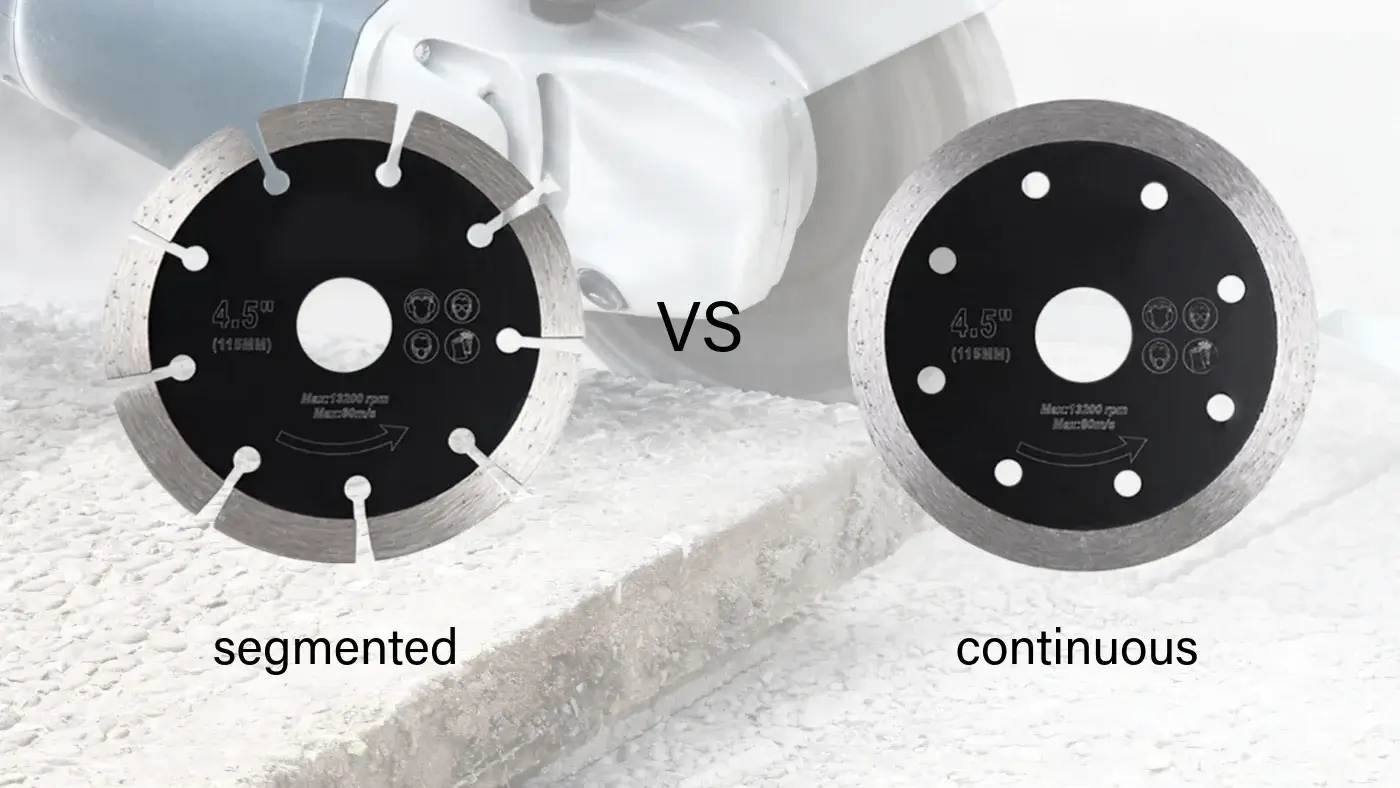
When it comes to cutting materials such as concrete, stone, or tile, using the right saw blade is crucial for achieving precise and efficient results. Two common options available in the market are segmented and continuous diamond rim. Both have distinct characteristics that make them suitable for specific applications. Let’s slice into the features and benefits of each to help you make an informed decision when choosing between a segmented or continuous diamond rim blade.
Segmented
Segmented blades are designed with a series of gullets or slots that divide the cutting edge into segments. These gaps allow for efficient debris removal during cutting, preventing the blade from overheating and extending its lifespan. The individual segments also enhance the cooling process by allowing air or water to flow freely, minimizing the risk of warping or damage.
Cutting Speed and Material Removal
Segmented blades are known for their exceptional cutting speed and material removal capabilities. The gaps between the segments facilitate faster cutting by reducing the contact area between the blade and the material being cut. This feature makes segmented ideal for applications where speed and efficiency are essential, such as cutting through concrete, brick, or asphalt.
Shop segmented bladesCooling and Dust Control
Segmented offers better cooling and dust control compared to continuous diamond rim. The spaces between the segments allow for efficient airflow, reducing the heat generated during cutting and minimizing the risk of overheating. Additionally, the gaps help in clearing debris, preventing the accumulation of dust and enhancing visibility during the cutting process.
Shop segmented bladesCost and Versatility
Segmented tends to be more affordable compared to continuous diamond rim. They are available in a variety of sizes, making them versatile and suitable for different cutting applications. From general-purpose tasks to heavy-duty projects, choosing a segmented option can offer a cost-effective solution for various cutting needs.
Shop segmented bladesContinuous Diamond Rim
Continuous diamond rim blades, as the name suggests, feature a continuous band of diamond grit around the entire circumference. They are known for their exceptional precision and ability to produce clean and smooth cuts. They are commonly used for cutting materials that require a high level of precision, such as ceramic tiles, granite, or delicate stone.
Cutting Precision and Finishing
Continuous diamond rim blades provide superior cutting precision, making them the preferred choice for applications where accuracy is paramount. The continuous rim design ensures a constant and even distribution of diamond grit, resulting in clean and smooth cuts with minimal chipping. They are often used in tasks that demand a high-quality finish, such as creating intricate designs or shaping fragile materials.
Material Compatibility
The continuous diamond rim is specifically designed for cutting hard and brittle materials like ceramic, porcelain, glass, and natural stone. The continuous rim allows for a slower, more controlled cutting process, which is essential for preventing material breakage or damage. If you are working with delicate materials that require intricate cuts or have a high risk of chipping, a continuous diamond rim blade is an excellent choice.
Cooling and Dust Control
One of the drawbacks of choosing continuous diamond rim is its limited cooling and dust control capabilities compared to the segmented variety. Since the continuous rim does not provide gaps for efficient airflow, they tend to generate more heat during cutting. Using water as a coolant or employing wet cutting techniques can mitigate this issue to some extent, but it may not be suitable for all applications.
Making the Right Choice
To choose between segmented and a continuous diamond rim, consider the following factors:
DEALER’S CHOICE
Dealer’s Choice
Choosing between segmented and continuous diamond rim depends on various factors such as the material being cut, the desired outcome, cooling requirements, and budget constraints. Segmented excels in speed, material removal, and cooling, while continuous diamond rim offers superior cutting precision and finishing. By carefully considering these factors, you can select the most suitable option for your cutting needs, ensuring optimal results and minimizing the risk of damage or subpar cuts.
Frequently Asked Questions
Segmented or continuous rim — both in stock and ready to ship
Best price guarantee — only at bladesasap.com!